
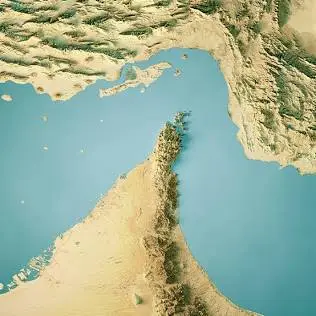
Following a Pakistan-brokered preliminary ceasefire deal to wind down the recent Middle East conflict, Iran and Oman have officially convened the first meeting of their newly established Joint Hormuz Committee in Muscat. The high-stakes bilateral talks mark the first formal diplomatic engagement regarding the strategic waterway since Tehran and Washington signed their interim memorandum of understanding.
Announced on X by Iranian Deputy Foreign Minister Kazem Gharibabadi, the session brought Iranian officials together with Oman’s Ambassador-at-Large Abdulaziz Al-Hinai to align on the future management of the strait while respecting the sovereign rights of the coastal states.
The Battle Over Transit Control
The future administration of the Strait of Hormuz—the world’s most critical maritime chokepoint, through which one-fifth of global oil and liquefied natural gas shipments normally flow—has become a central battlefield in diplomatic negotiations. Following months of wartime blockades and recent retaliatory exchanges between U.S. forces and Iranian coastal batteries, the waterway’s legal framework remains highly volatile.
A delicate operational standoff has emerged over how ships navigate the narrow channel:
- The Iranian Mandate: Tehran is strongly pushing to implement new maritime “service fees” on commercial vessels and insists that all shipping traffic must transit strictly through a corridor hugging the Iranian coastline.
- The Omani Counter-Strategy: Oman has resisted transit fee structures and recently coordinated with the United Nations to announce a “temporary maritime corridor” close to its own shores, offering an alternative route for international merchant fleets.
- The U.S. Opposition: Backed by customary international law regarding free transit through international straits, Washington completely opposes any service or passage fees, warning that any unilateral disruptions will face immediate deterrence.
Implementation of the Islamabad Accord
The Joint Hormuz Committee is a direct product of the Islamabad Memorandum of Understanding signed between Iran and the United States earlier this month. Under Article 5 of the interim peace deal, Tehran committed to diplomatic consultations with Muscat and other Gulf littoral states to iron out navigation logistics.
| Diplomatic Stance | Primary Objective | Geopolitical Risk Factor |
| Iran | Collection of service fees; tracking via domestic shoreline corridor. | Warns that alternative routes will actively escalate regional military tensions. |
| Oman | Maintaining free passage; opening parallel temporary lanes near its coast. | Ambiguous stance on long-term management costs; seeks regional stability. |
| United States | Complete enforcement of free international transit; no shipping fees. | Stated readiness to pause military operations only if vessels can move freely. |
Despite the heavy rhetoric and a recent strike on a commercial vessel, a U.S. official confirmed that both American and Iranian forces are currently standing down to let technical talks proceed. While a final architecture for the strait has yet to be settled, the Muscat summit marks a necessary, though fragile, step toward restoring global confidence in the battered energy corridor.