
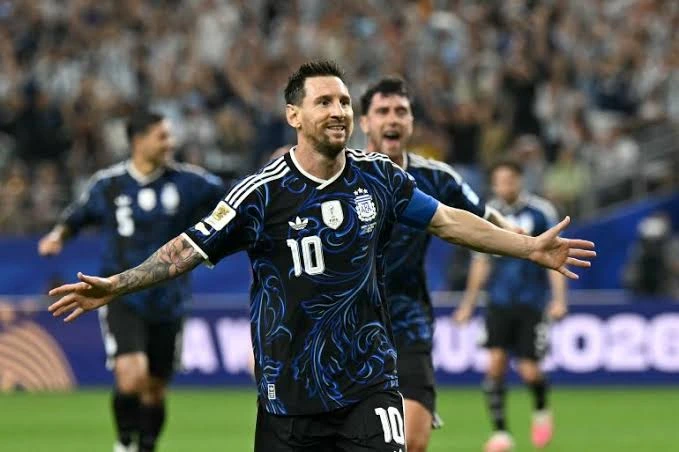
As Argentina charges forward in their FIFA World Cup 2026 title defense, a familiar conversation is dominating the football world. At 39 years old, Lionel Messi is still shattering records, tracking six goals in the tournament so far and surpassing Miroslav Klose to become the top scorer in World Cup history.
With Argentina looking lethal, pundits and fans are asking: Will lifting another World Cup secure Messi an unprecedented ninth Ballon d’Or?
The connection between international glory and football’s ultimate individual prize is strong, but history shows it is rarely a simple guarantee.
The Evolution of the “World Cup Double”
Historically, dominating a World Cup year was the most direct route to the Ballon d’Or. Before the award went global in 1995, European legends like Bobby Charlton (1966), Paolo Rossi (1982), and Lothar Matthäus (1990) swept both trophies in a single calendar year.
Once the award opened up to global players, the trend initially held firm:
- 1998: Zinedine Zidane (France)
- 2002: Ronaldo Nazário (Brazil)
- 2006: Fabio Cannavaro (Italy)
When the Pattern Broke
In the modern era, the relationship between the World Cup and the Ballon d’Or began to decouple. Voters started favoring full club seasons over a month-long international tournament.
- 2010: Spain won their historic first World Cup, yet club phenom Lionel Messi took home the Ballon d’Or over Spanish icons Andrés Iniesta and Xavi.
- 2014: Germany lifted the trophy in Brazil, but Cristiano Ronaldo secured the golden ball.
- 2018: France took the crown, but Croatia’s Luka Modrić won the individual award after steering his underdog nation to the final.
It wasn’t until Qatar 2022 that the stars aligned again. Messi’s magical run to victory with Argentina earned him his eighth Ballon d’Or, proving that an extraordinary World Cup performance can still completely hijack the narrative.
The Verdict for 2026
The Ballon d’Or has firmly evolved into an honor that evaluates a player’s full body of work across an entire season. However, when the race is razor-thin, the World Cup acts as the ultimate tiebreaker.
If Messi can replicate his Qatar magic and drag La Albiceleste to back-to-back world titles, it will be incredibly difficult for voters to look elsewhere.
We will have our final answer on October 26, 2026, when the Ballon d’Or ceremony takes place in London. Marking its 70th anniversary, the event will step outside of Paris for the first time in decades to honor the inaugural winner, Sir Stanley Matthews.