
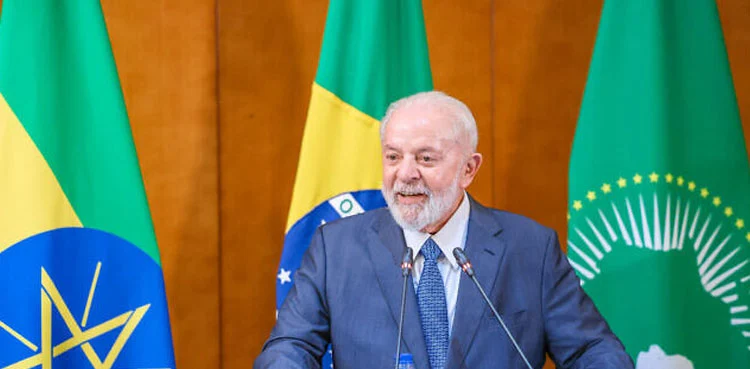
Brazilian President Luiz Inacio Lula da Silva has strongly criticized U.S. President Donald Trump’s proposal to charge ships transiting the Strait of Hormuz, warning that such a policy would amount to “piracy” and could worsen global economic pressures.
Brazilian President Luiz Inácio Lula da Silva on Monday condemned U.S. President Donald Trump over his proposal to impose a 20% fee on cargo passing through the Strait of Hormuz, saying the move would effectively turn the United States into a “pirate” state.
Speaking at a public event in São Paulo, Lula criticized Trump’s plan to charge ships for navigating the strategic waterway after Washington pledged to maintain security in the region.
Lula Calls Proposal ‘Piracy’
Lula said that charging vessels for access to one of the world’s most important shipping routes would set a dangerous international precedent.
“This used to be considered piracy,” the Brazilian president said.
He added that a global power such as the United States, which has historically opposed piracy, should not adopt policies that resemble it.
The comments came after Trump announced plans to reinstate a blockade of Iranian ports and introduce a levy on cargo moving through the Strait of Hormuz as part of efforts to finance maritime security operations.
Economic Impact on Brazil
Lula warned that the ongoing conflict in the Middle East and disruptions to global energy markets were already increasing the cost of living in Brazil.
He said rising oil prices had contributed to higher prices for essential food items, including beans, rice, tomatoes and onions, while also pushing up fuel costs.
To help offset the impact on consumers, Brazil’s government has introduced temporary measures aimed at limiting fuel price increases.
The administration is also using revenue generated from a 12% tax on crude oil exports, introduced earlier this year, to cushion the economic effects of higher global energy prices.
Regional Tensions Continue
The Strait of Hormuz remains one of the world’s most strategically important shipping lanes, carrying a significant share of global oil exports.
Recent tensions involving the United States, Iran and Israel have heightened concerns over maritime security and the stability of international energy supplies.
Trump has argued that charging vessels using the waterway would help cover the cost of protecting international shipping, while critics warn the proposal could further escalate geopolitical tensions and disrupt global trade.