
US introduces fresh 10% and 12.5% import duties under the Trade Act of 1974, citing forced labour concerns as Pakistan, India, the EU and China are among those affected.
WASHINGTON: The administration of US President Donald Trump will impose new import tariffs ranging from 10% to 12.5% on goods from 60 trading partners, including Pakistan, India, Canada, the European Union, China and Japan, beginning Friday.
The new duties replace a temporary 10% global tariff that expires at 12:01 a.m. EDT, marking Washington’s latest effort to reshape US trade policy following a legal setback earlier this year.
New Tariffs Follow Supreme Court Ruling
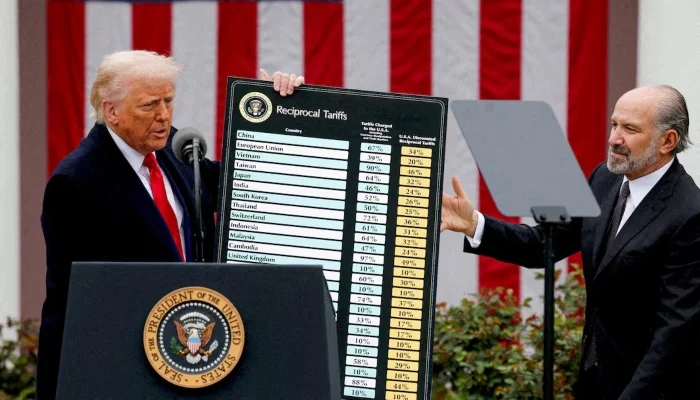
The latest measures come after the US Supreme Court struck down Trump’s earlier “reciprocal tariffs” in February, ruling that the administration had exceeded its authority under national emergency powers.
To maintain broad import duties, the White House has instead invoked Section 301 of the Trade Act of 1974, a legal framework previously used to address unfair foreign trade practices.
The new tariffs will take effect immediately after the temporary tariff expires, while goods already in transit will remain exempt until July 28.
Forced Labour Enforcement Cited
According to the Office of the United States Trade Representative (USTR), the tariffs are intended to encourage stronger enforcement of laws prohibiting goods produced through forced labour.
US Trade Representative Jamieson Greer said many trading partners have failed to implement effective measures against forced labour, creating unfair competition and undermining international labour standards.
He stated that the United States has long prohibited imports produced through forced labour and expects its trading partners to strengthen similar enforcement efforts.
Countries Facing 10% Tariffs
The United States will apply a 10% tariff on imports from several countries, including:
- Pakistan
- India
- Bangladesh
- Canada
- United Kingdom
- Malaysia
- Mexico
- Indonesia
- Cambodia
- Sri Lanka
- Argentina
- Ecuador
- Guatemala
- Honduras
- Jordan
- El Salvador
- Trinidad and Tobago
EU, Japan and South Korea Also Affected
Imports from the European Union, Japan, South Korea, Taiwan and Switzerland will face tariff rates that, when combined with existing most-favoured-nation duties, will total 10% or 12.5%, depending on the product category.
Meanwhile, another 38 countries, including China, will be subject to a 12.5% tariff.
China Trade Policy Remains Separate
US officials said the new tariffs do not replace Washington’s broader trade negotiations with China.
The Trump administration has indicated it intends to restore tariffs on Chinese imports to approximately 20%, consistent with the trade understanding reached between President Trump and Chinese President Xi Jinping in late 2025.
Before the latest announcement, tariffs on many Chinese goods had fallen to 10%, excluding earlier 25% duties imposed during Trump’s first administration on numerous industrial products.
Most Imports Covered, With Key Exemptions
According to the Federal Register notice, the tariffs will apply to approximately 99.4% of US imports.
However, several categories have been exempted, including:
- Oil and natural gas
- Fertilisers
- Selected agricultural products
- Certain food items
The exemptions are intended to minimise disruptions to critical supply chains while maintaining pressure on trading partners to strengthen labour protections.
Global Trade Impact Expected
Trade analysts say the new tariff regime could significantly affect global supply chains and international commerce, particularly for export-oriented economies that rely heavily on access to the US market.
While Washington argues the measures are aimed at promoting fair trade and protecting workers’ rights, several affected countries are expected to review the tariffs and consider possible responses through diplomatic or legal channels.
As the new duties take effect, businesses worldwide will be closely monitoring their impact on trade flows, manufacturing costs and global economic growth.