
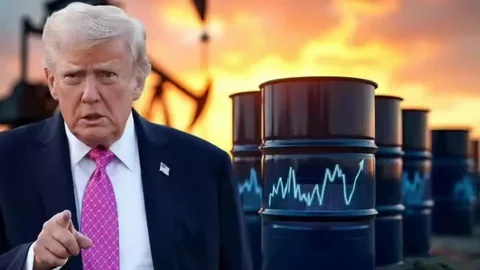

President Donald Trump announced on August 28, 2026 that the United States has entered an agreement with Venezuela to take majority control of 65 billion barrels of Venezuela oil reserves roughly a fifth of the country’s total proven crude. Trump called it “THE BIGGEST OIL DEAL IN WORLD HISTORY” and said it was negotiated by Secretary of State Marco Rubio, Defense Secretary Pete Hegseth, and Venezuela’s interim President Delcy Rodriguez.
The deal has no cost to American taxpayers, according to Trump. It’s structured through a private business partnership and is aimed at reviving Venezuela’s battered energy sector while bringing more crude oil to the United States to help lower fuel prices.
Background Why Venezuela Oil Reserves Matter So Much
The Largest Proven Reserves on Earth
Venezuela oil reserves ranking sits at number one globally. The country holds an estimated 303 billion barrels of proven crude oil about 17% of the world’s entire supply, according to the US Energy Information Administration (EIA). That figure puts Venezuela ahead of Saudi Arabia, Iran, Iraq, and every other oil-producing nation.
Yet for years, Venezuela has been producing far below its potential. In 2026, production sits at roughly 1.25 million barrels per day, a fraction of what its reserves could support if properly developed.
How Venezuela’s Oil Industry Collapsed
The story of Venezuela oil reserves is a study in squandered potential. Under Hugo Chavez in the early 2000s, the government nationalized the oil sector and pushed out foreign companies, including major US firms. Decades of underinvestment, corruption, US sanctions, and mismanagement followed.
By the time Nicolas Maduro was ousted in early 2026, PDVSA the state oil company was a shell of what it once was, operating with aging infrastructure and a fraction of its former workforce.
What Trump Actually Announced
The Deal Structure
Trump’s announcement was big on headline, lighter on details. What is confirmed:
- The US has secured majority control of more than 65 billion barrels of Venezuela’s proven oil reserves
- The deal was negotiated by Marco Rubio (State), Pete Hegseth (Defense), and Delcy Rodriguez (Venezuela’s interim president)
- The agreement involves a private business partnership not a direct government takeover
- Trump said it would come at no cost to American taxpayers
- The deal is expected to attract nearly $100 billion in private investment
The specific fields, companies involved, and legal structure of majority control were not disclosed in Trump’s announcement.
Why the US Moved Now
The timing makes sense from Washington’s perspective. The US-Israel war against Iran has severely disrupted Gulf oil flows through the Strait of Hormuz, which previously carried about 20% of global petroleum. US strategic petroleum reserves fell below 300 million barrels in August down more than 100 million barrels since the start of 2026.
Gas prices in the US averaged $4.09 per gallon as of August 28, compared to $3.21 a year earlier. Trump needs more oil, and Venezuela oil reserves US partnership offers a geographically close, politically controllable alternative to Gulf crude.
Secretary of State Marco Rubio described the deal on social media as securing “stable, low-cost oil for the United States” while helping Venezuela “boost the economy and government revenue.”
Venezuela Oil Reserves vs Iran How Do They Compare?
Scale Comparison
Venezuela oil reserves vs Iran is a comparison that comes up often in energy discussions:
| Country | Proven Reserves |
| Venezuela | 303 billion barrels |
| Saudi Arabia | ~267 billion barrels |
| Iran | ~208 billion barrels |
| Iraq | ~145 billion barrels |
| Russia | ~80 billion barrels |
Venezuela’s reserves are roughly 45% larger than Iran’s. The difference is that Iran has historically been able to extract and export at much higher volumes. Venezuela’s production collapse is what created the gap between its theoretical ranking and its real-world energy influence.
With US investment now entering the picture, that gap could start to close if the deal holds up legally and financially.
Venezuela Oil Reserves Quality Is It Good Oil?
Heavy Crude Challenges
Venezuela oil reserves quality is an important caveat in the headlines. Unlike the lighter crude from Saudi Arabia or Texas, Venezuela’s reserves are primarily extra-heavy crude oil thick, dense, and harder to refine.
This type of crude requires special refineries and costs more to process. US Gulf Coast refineries, many of which were originally designed to handle Venezuelan heavy crude before sanctions disrupted the relationship, are well-positioned to take it on again.
The quality issue doesn’t eliminate the deal’s value it just means the economics are more complex than simple barrel-count comparisons suggest.
Venezuela Oil Reserves How Many Years Left?
Production Timeline
Venezuela oil reserves how many years at current production rates (1.25 million barrels per day) is mathematically enormous over 660 years at that pace.
Even at the much higher production levels US investment would aim for analysts suggest 3 to 4 million barrels per day within a decade is theoretically achievable Venezuela’s reserves would last well over 200 years.
For context, Saudi Arabia at its current production rate has roughly 70 years of reserves. Venezuela’s resource base is the most substantial on the planet by this measure.
Expert Concerns Is This Deal Real?
Not everyone is convinced the announcement is what it appears to be.One analyst told Reuters that it’s “unclear whether a US government lease would have a legal basis under Venezuela’s constitution and its new hydrocarbons law,” adding there is “no precedent” for this kind of arrangement. Venezuela’s legal framework for oil ownership is complex, and majority foreign control of reserves raises constitutional questions that Trump’s social media post did not address.
Regional and Global Impact
The announcement has immediate implications beyond the US-Venezuela relationship.
For OPEC: A revived Venezuela producing 3-4 million barrels per day would shift global supply dynamics significantly. OPEC currently counts Venezuela as a member US-backed production increases could create tension within the cartel.
For Iran: With Gulf oil flows disrupted by the ongoing US-Israel-Iran conflict, Venezuela’s reserves entering the market in volume would directly reduce Iran’s pricing leverage.
For Latin America: The deal signals a major expansion of US economic and political influence in South America, at a moment when Venezuela’s political future remains uncertain.
For global fuel prices: If production actually scales up as envisioned, it could put meaningful downward pressure on oil prices which is precisely what Trump is promising American consumers.
Conclusion
Trump’s Venezuela deal is either the most significant energy agreement of the decade or the most ambitious announcement in search of a workable structure possibly both. The Venezuela oil reserves numbers are real: 303 billion barrels is the largest proven reserve on earth, and 65 billion barrels at majority US control would be an extraordinary energy asset.
Frequently Asked Questions
How many years of oil is left in Venezuela?
At Venezuela’s current production rate of roughly 1.25 million barrels per day, its proven reserves of 303 billion barrels would last mathematically over 660 years. Even if US investment successfully scales production to 3-4 million barrels per day within a decade which is an ambitious but cited target Venezuela’s reserves would still sustain production for well over 200 years. The more pressing question isn’t how long the oil lasts, but whether the investment environment, infrastructure, and political stability exist to extract it efficiently.
Is Venezuela an oil-rich country?
Venezuela is technically the wealthiest oil country on earth by proven reserves. It holds approximately 303 billion barrels of proven crude oil roughly 17% of global supply and more than Saudi Arabia, Iran, or any other nation. The tragedy of Venezuela’s energy story is the enormous gap between that resource wealth and actual economic outcomes. Decades of mismanagement, nationalization of foreign assets, US sanctions, and political instability turned what should be one of the world’s most prosperous economies into one struggling with poverty and infrastructure collapse.
Who has the biggest oil reserve in the world?
Venezuela holds the world’s largest proven oil reserves at approximately 303 billion barrels, according to the US Energy Information Administration. Saudi Arabia comes second with around 267 billion barrels, followed by Iran at roughly 208 billion barrels and Iraq at 145 billion barrels. Russia and Kuwait also rank in the top tier. The Venezuela oil reserves ranking at number one is well-established the challenge has always been extraction, not existence.