
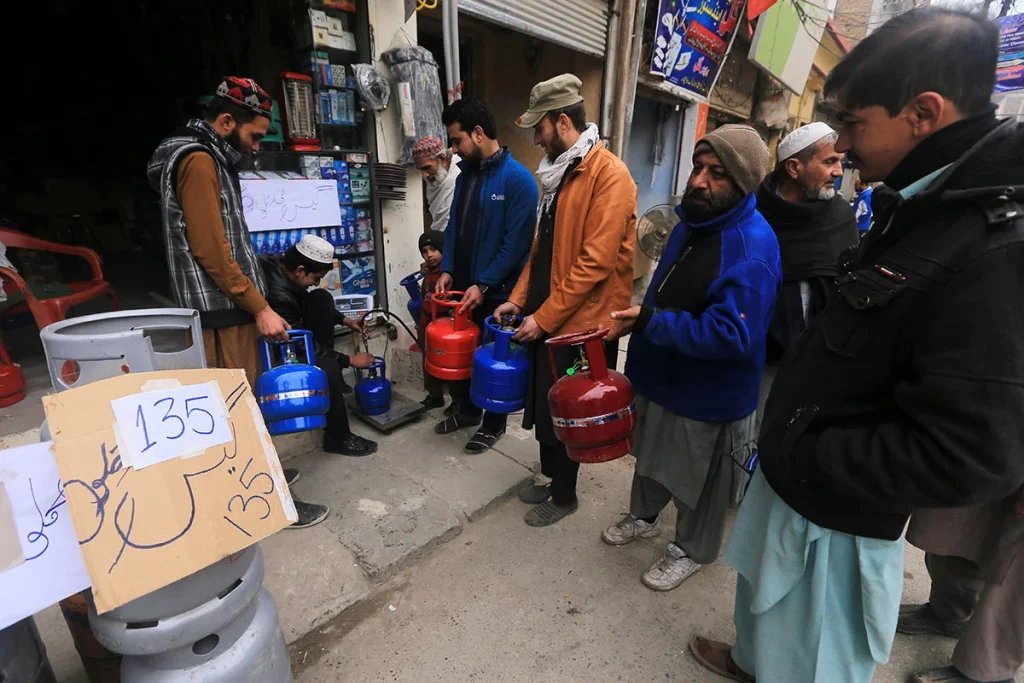

The federal government has hinted at moving toward uniform gas pricing across Pakistan, with Petroleum Minister Ali Pervaiz Malik saying the country’s existing gas pricing system needs to be revisited as part of a broader sector reform push. The announcement comes alongside Pakistan’s recent shift to daily petrol price adjustments, marking one of the most significant changes to the country’s energy pricing structure in years.
Background
Pakistan’s gas sector has long relied on a pricing structure where different categories of consumers pay different rates depending on usage volume and connection type, alongside cross-subsidies between imported LNG, pipeline gas, and locally produced wellhead gas. Officials have repeatedly flagged this system as financially unsustainable, citing rising circular debt and falling domestic gas production.
Petroleum Minister Ali Pervaiz Malik has called for a phased transition toward fair and uniform gas pricing for all consumers, while stressing that vulnerable segments of the population should continue receiving protection through targeted social support programs rather than blanket subsidies. The government is working with the World Bank on a broader Gas Sector Transition Roadmap aimed at restructuring the industry.
Details
What Uniform Gas Pricing Could Mean for Consumers
The proposed reforms include introducing a Multi Year Tariff framework for gas utilities, based on a Regulatory Asset Base and Weighted Average Cost of Capital model. This would apply new regulatory methodologies across transmission, distribution, and gas sales operations, replacing the current patchwork of subsidized slabs and cross-subsidies that officials say have left companies like Sui Northern and Sui Southern financially strained.
As part of the same broader push, the government has also discussed unbundling the two major Sui gas utilities, separating their transmission, distribution, and energy sales businesses to allow greater private sector participation across the gas supply chain. Officials say uniform national gas prices have created problems partly because system losses vary dramatically by region, running highest in Balochistan and Khyber Pakhtunkhwa.
Petrol Price in Pakistan Today and the Shift to Daily Pricing
Alongside the gas pricing debate, Pakistan has already implemented a major change to fuel pricing. As of July 2026, the federal government approved daily petroleum pricing, replacing the previous fortnightly and later weekly review system. Under the new mechanism, OGRA calculates and publishes petrol and diesel rates daily based on a rolling seven-day average of international Platts benchmark prices.
This means the petrol price in Pakistan today increase or decrease can now happen on a near-daily basis rather than shifting only every two weeks as in the past. The government has said this approach helps domestic prices track global oil market movements more closely, particularly important given recent volatility tied to tensions around the Strait of Hormuz.
Because prices are now revised so frequently, readers looking for the exact current PSO petrol price or OGRA petrol price in Pakistan today should check OGRA’s official notification portal directly, since figures reported across different outlets can vary depending on when they were published and may already be outdated by the time they’re read.
LPG and Gas Cylinder Pricing Trends
LPG cylinder prices in Pakistan, including the commonly used 12 kg gas cylinder and 14 kg gas cylinder sizes sold for domestic use, are reviewed monthly by OGRA based on international LPG benchmark prices and the exchange rate. The per-kilogram LPG price, which forms the base for calculating cylinder costs at different weights, has fluctuated significantly over the past year in line with broader energy market volatility.
As with petrol and diesel, exact current LPG 1kg price and cylinder rates change frequently enough that readers should verify the latest figure through OGRA’s monthly LPG pricing notification rather than relying on a single fixed number, since even a short delay between publication and reading can make a specific quoted price outdated.
Quotes
Petroleum Minister Ali Pervaiz Malik, addressing the gas pricing issue during a review meeting with Sui Southern Gas Company officials, said the goal was to make the sector more efficient, transparent, and financially sustainable, enabling better services for consumers while working toward permanent solutions to the sector’s underlying challenges.
Announcing the shift to daily fuel pricing, Malik said the government and cabinet had jointly decided that OGRA would determine petroleum prices daily and publish them online as part of a gradual move toward deregulating the petroleum market, adding that the change would not place any additional financial burden on the public.
A Dawn business analysis of the pricing reform noted that despite the shift to daily adjustments, OGRA continues to determine prices based on government-set parameters, meaning what has changed is the frequency of price setting rather than a genuine move toward full market deregulation.
Impact
For ordinary households, a shift toward uniform gas pricing could mean significant changes in monthly utility bills, particularly for consumers currently benefiting from subsidized slabs tied to lower-cost wellhead or pipeline gas. Businesses and industrial users, who often pay different rates depending on their consumption category, would also see costs recalculated under any new unified structure.
The move toward daily fuel pricing has similarly reshaped how transport costs and everyday budgeting work for millions of Pakistanis, since petrol and diesel rates can now shift more frequently than before, requiring closer attention from commuters, transport operators, and businesses that rely on fuel-dependent logistics.
More broadly, both reforms reflect Pakistan’s ongoing negotiations with the International Monetary Fund and World Bank around energy sector restructuring. Officials frame the changes as necessary steps toward reducing circular debt and improving the long-term financial health of the country’s energy utilities.
Conclusion
With the government still working through consensus-building on uniform gas pricing and the daily fuel pricing system now in its early months of operation, further adjustments to both structures are likely in the coming months. Consumers are advised to check OGRA’s official notifications directly for the most accurate, up-to-date petrol, diesel, and LPG rates, given how frequently these figures are now changing.
Frequently Asked Questions
What is the price of gas per unit in Pakistan?
Natural gas pricing in Pakistan varies significantly depending on the source and consumer category, with officials noting that LNG has cost as much as Rs. 3,600 per unit, compared to roughly Rs. 1,200 to Rs. 1,400 for pipeline gas and Rs. 600 to Rs. 700 for wellhead gas in past pricing breakdowns. Because these rates apply differently across residential, commercial, and industrial consumers, and because the government’s proposed uniform pricing reform is still being negotiated, the most accurate current per-unit gas rate for a specific consumer category should be confirmed directly through SNGPL, SSGCL, or OGRA’s official billing information.
What is the price of a 45 kg gas cylinder in Pakistan today?
Larger commercial LPG cylinders, including 45 kg sizes typically used by restaurants and small businesses, are priced based on OGRA’s monthly per-kilogram LPG rate multiplied by the cylinder’s weight, plus applicable distributor margins. Since OGRA revises the per-kilogram LPG rate on a monthly basis in response to international LPG benchmark prices and currency fluctuations, the exact current price of a 45 kg cylinder should be checked against OGRA’s latest monthly notification or confirmed directly with a licensed LPG distributor, since prices reported by various websites may not reflect the most recent revision.
What is the price of LPG gas in Pakistan today?
LPG prices in Pakistan, covering both the per-kilogram rate and standard domestic cylinder sizes such as 11.8 kg, 12 kg, and 14 kg, are reviewed monthly by OGRA based on international benchmark prices, freight costs, and the Pakistani rupee’s exchange rate against the US dollar. Because these rates have shown notable volatility over the past year amid regional energy market disruptions, readers should refer to OGRA’s official monthly LPG price notification for the exact current rate rather than relying on older cached figures, which can become outdated within weeks.