
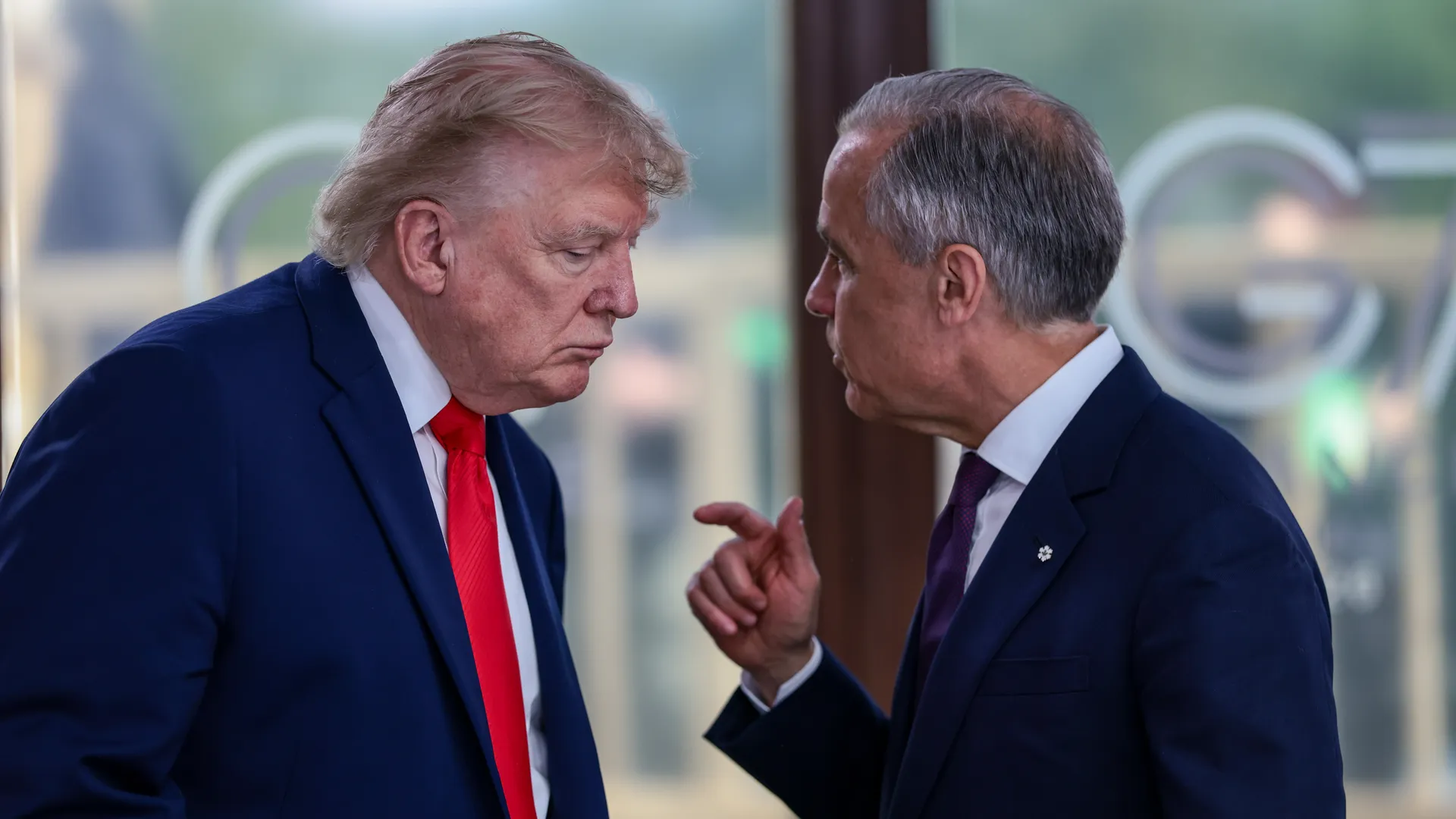
WASHINGTON: US President Donald Trump has announced a 50% tariff on a broad range of Canadian imports, citing what he described as Canada’s “unequal treatment” of American automobiles, dairy products, and alcoholic beverages. The move marks a significant escalation in trade tensions between the two North American allies.
According to the White House, the new tariffs will take effect 30 days from now and will apply to a wide range of consumer and industrial goods, including wine, hockey sticks, and cement. However, several key Canadian exports—including energy products, potash, critical minerals, and fish—have been exempted from the new duties.
The latest action comes after Canada imposed retaliatory tariffs in 2025 in response to previous US trade measures. While Canadian Prime Minister Mark Carney later eased some of those tariffs, Ottawa retained duties on US automobiles, steel, and aluminum.
Responding to the announcement, Carney said Canada remains committed to resolving the dispute through dialogue and is prepared to intensify trade negotiations with Washington in the coming weeks.
In a statement posted on X, Carney criticized the US decision, calling it another unilateral trade action that undermines the Canada–United States–Mexico Agreement (USMCA). He also referred to recent “threats to Canadian sovereignty,” an apparent reference to President Trump’s repeated remarks suggesting Canada should become America’s 51st state.
Unlike previous tariff measures introduced under emergency powers—many of which were ruled unlawful by the US Supreme Court earlier this year—the new tariffs are being implemented under a different federal law that has not yet been tested in court.
The duties will apply to covered Canadian goods regardless of whether they qualify for preferential treatment under the USMCA, potentially affecting billions of dollars in bilateral trade.
The United States already maintains tariffs ranging from 15% to 50% on Canadian steel, aluminum, and copper, along with a 35% duty on Canadian softwood lumber and a 25% tariff on non-US components used in vehicles. Canada, in turn, continues to impose 25% counter-tariffs on selected US steel, aluminum, and automotive imports.
Although President Trump recently threatened additional tariffs over smoke from Canadian wildfires affecting US cities, the executive orders signed on Monday make no reference to wildfires. Instead, they focus on long-standing US concerns regarding Canada’s policies on automobiles, dairy, and alcohol—signaling that trade negotiations between the two countries have reached another critical point.