
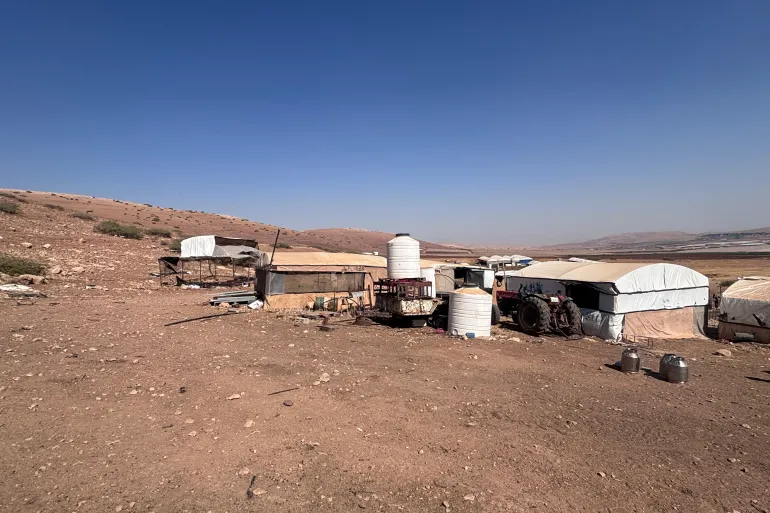
Residents of Ras al-Ahmar say access restrictions and damaged water infrastructure are disrupting daily life and agriculture in the Jordan Valley
Residents of Ras al-Ahmar in the occupied West Bank’s northern Jordan Valley say increasing road closures and water shortages have made daily life significantly more difficult, forcing lengthy detours and placing additional pressure on farming communities.
According to local residents, routes that once took only a few minutes to travel now require hours because of restricted access and the closure of roads leading into the area.
Local farmer Thaer Bisharat said the journey from the nearest village, which previously took less than 10 minutes, now often exceeds an hour due to road closures and the need to use a winding dirt track accessible mainly to four-wheel-drive vehicles.
Residents say most entry points into Ras al-Ahmar remain closed, with movement limited to a single unpaved route.
The Israeli military has maintained restrictions in parts of the northern Jordan Valley, citing security considerations. Israeli authorities have not commented specifically on the access restrictions described by residents in this report.
During the latest restrictions, local residents said Israeli forces demolished several privately owned water wells in the nearby al-Buqaia Plain, including one belonging to a relative of Bisharat.
The reported destruction has added to concerns over water availability in one of the West Bank’s key agricultural regions.
The circumstances surrounding the demolitions and the reasons for the action were not immediately confirmed by Israeli authorities.
The northern Jordan Valley is known for producing crops including bananas, grapes, olives, and potatoes.However, residents say limited water supplies and restricted movement have left many fields neglected, with crops at risk due to insufficient irrigation.
Several farmers reported difficulties transporting agricultural supplies and harvesting produce because of prolonged travel times and access limitations.
Residents say the restrictions have affected routine activities such as shopping, accessing healthcare, and visiting relatives. Bisharat described feeling increasingly isolated as family members often spend hours traveling to nearby towns for essential goods.
Humanitarian organizations have repeatedly expressed concern about the impact of movement restrictions and limited access to water on Palestinian communities in the occupied West Bank.
The broader situation in the region remains a source of international attention as tensions continue between Israeli authorities and Palestinian residents.