
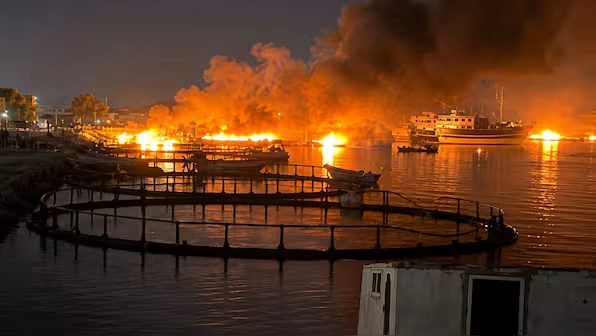
The United States carried out a third consecutive day of strikes on Iran after President Donald Trump announced a renewed blockade of Iranian ports and proposed a 20% cargo fee for vessels transiting the Strait of Hormuz, further escalating tensions in the Gulf.
The United States launched another wave of military strikes on Iran early Tuesday, marking the third straight day of attacks as tensions between the two countries continue to rise.
The latest escalation came after Donald Trump announced the reimposition of a blockade on Iranian ports and floated a 20% fee on cargo passing through the strategically important Strait of Hormuz. Despite the military action, Trump said a diplomatic agreement with Tehran remained possible.
Meanwhile, the United Arab Emirates Ministry of Defence said Iran struck two commercial ships in the Strait of Hormuz, killing one crew member during the attacks. The ministry did not immediately disclose the identities of the vessels or their nationalities.
In a separate statement, Iran’s Islamic Revolutionary Guard Corps claimed responsibility for targeting two “offending supertankers” in the waterway. The IRGC alleged the ships ignored repeated warnings, switched off their navigation systems and attempted to sail through what it described as a “mined route.”
Iranian authorities did not identify the vessels or clarify whether they were the same ships referenced by UAE officials.
The Strait of Hormuz remains one of the world’s most critical energy chokepoints, with a significant share of global oil and liquefied natural gas exports passing through the narrow waterway. Any disruption to shipping in the region has the potential to impact global energy markets and international trade.
The latest developments have heightened concerns over regional security, with world leaders closely monitoring the situation as fears grow that the conflict could further disrupt maritime traffic and diplomatic efforts.