
Science Communication Gains New Focus as Japan Launches Dedicated University Department
Science can often seem distant and difficult for the general public to understand. Science communication seeks to bridge that gap by making scientific discoveries, research, and processes more accessible while encouraging meaningful dialogue between scientists and society.
More than two decades have passed since Japanese universities, including the University of Tokyo, introduced science communication programmes in 2005. Although the field has expanded, concerns remain over declining public trust in science, growing social divisions, and the spread of misinformation in an era increasingly shaped by artificial intelligence.
To address these challenges, Tokyo University of Science established Japan’s first dedicated Department of Science Communication in April this year. While many universities have previously offered science communication through elective courses or minor programmes, this marks the country’s first full academic department devoted exclusively to the discipline.
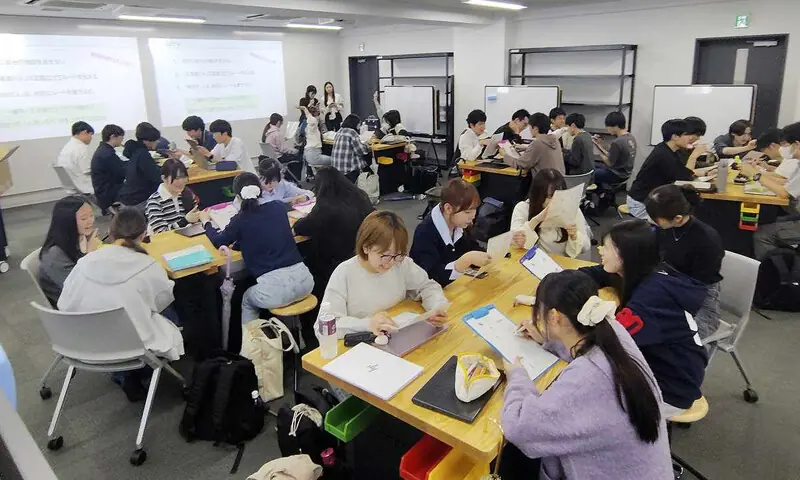
The department welcomed its inaugural class of around 80 students. During one of the first lessons in late April, students participated in an exercise designed to demonstrate the complexities of communication. Working in pairs, they were asked to describe routes on maps using only verbal instructions. Unbeknownst to them, each student had a different version of the map, with varying landmarks such as forests and factories. As a result, many of their directions failed to match, highlighting how communication can break down when people possess different information.
The exercise was led by Professor Yuko Ikkatai, a specialist in science communication, who explained that its purpose was to help students experience firsthand the challenges of communicating across knowledge gaps.
“The goal is to give students a firsthand sense of the difficulties in communication when there is a gap in the information held by individuals,” she said.
The activity reflects a common challenge faced by scientists when communicating with the public, where differences in background knowledge can lead to misunderstanding despite good intentions.
The course also explores the evolution of science communication. Students learn how the concept gained momentum in the United Kingdom during the 1980s, when scientists and policymakers sought to improve public understanding of science to support scientific progress. Over time, the focus shifted from simply delivering scientific information to encouraging two-way dialogue and public participation in scientific research and decision-making.
Beyond communication theory, students receive foundational education in mathematics, physics, information science, and data science, enabling them to combine scientific knowledge with effective communication skills.
Professor Yuki Watanabe, head of the department and an expert in educational technology, said the programme aims to develop professionals who can confidently navigate both science and society.
“We aim to cultivate professionals equipped with both scientific expertise and communication skills,” Watanabe said.
Graduates are expected to pursue careers in government agencies, private companies, education, and public policy, where they can help develop science-based strategies, promote scientific literacy, or teach science in junior and senior high schools.