
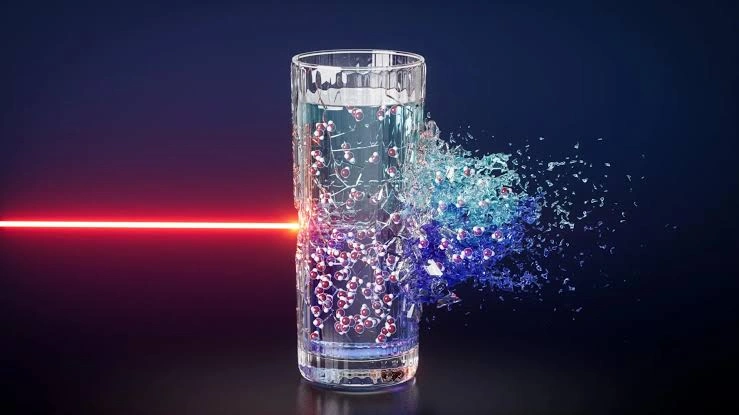
In a major leap forward for computational chemistry, researchers at Osaka University have successfully utilized artificial intelligence to decode the complex, hidden behaviors of supercooled water. Supercooling is a unique physical phenomenon where liquid water manages to drop below its standard freezing temperature without turning into solid ice. Studying this phase has long perplexed scientists because water molecules form a highly chaotic and shifting structural landscape just before nucleation—the starting point of ice crystallization.
To bridge the gap between competing theories, the research team developed a unified AI model designed to systematically evaluate and align microscopic “structural descriptors.” These descriptors act as individual blueprints, capturing variables like local density, tetrahedral bond order, and the structural integrity of hydrogen-bond networks. Because previous studies relied on independently developed descriptors that varied wildly in scale and parameters, cross-comparing data was historically chaotic; the newly deployed AI successfully translated these disparate metrics onto a standardized, common representation.
The breakthrough, published in the scientific journal Communications Chemistry, provides an unprecedented look at how water behaves in extreme thermal conditions. Specifically, the AI framework clarified the competitive dynamics between high-density liquid (HDL) and low-density liquid (LDL) regimes that occur during supercooling. By using machine learning to standardize feature selection and feature engineering, the team has not only resolved ambiguity in water simulations but also created a transferable ML workflow that can be used by materials scientists to predict molecular anomalies and phase transitions in other liquid compounds.