

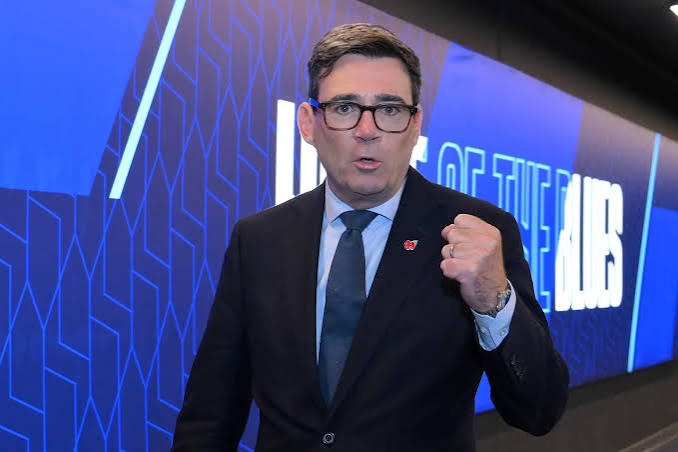
Prime Minister Andy Burnham has said he would urge caution over scrapping the Saturday 3pm blackout, and he asked broadcasters to think about how kick-off changes affect supporters. His comments have revived a long-running debate in English football. The question is whether the old rule still protects the game or simply holds it back.
Background: Why the 3pm TV Blackout Exists
The rule was introduced in the 1960s to encourage fans to attend lower-league games, and it stops matches being shown on UK television between 2:45pm and 5:15pm on Saturdays. The idea was simple. If top-flight games were shown live, fewer people might travel to watch smaller clubs in person.
The restriction falls under UEFA’s Article 48 and is enforced in Britain by the Football Association and the Scottish Football Association. The Premier League does not control it alone. Any change would need agreement from several football bodies, including the EFL and the FA.
Over the years, the rule has faced growing criticism. Broadcasters want more live games to show, while many fans say the blackout pushes people towards illegal streams. At the same time, supporter groups and smaller clubs argue that the rule still plays an important role in protecting matchday income. You can follow more sports news on this topic as the debate develops.
What Andy Burnham Said
Asked by reporters whether it was time to end the blackout, Burnham said he would “urge a bit of caution” on the issue. He explained that the rule helps protect the income of lower-league clubs. In his view, any decision to remove it must be considered carefully before anyone moves ahead.
Burnham also said he would want to protect the football pyramid before agreeing to even more live football. That message matters because the pyramid is the full structure of English clubs, from the Premier League down to non-league sides. Many of the smaller lower-league clubs depend heavily on gate receipts and local supporters.
The Prime Minister also turned his attention to fixture scheduling. He criticised the way kick-off times are changed for television, saying the system pays little regard to travelling supporters. Away fans often book trains and hotels weeks in advance, so a late change can leave them with extra costs or no way to attend.
Pressure to Scrap the Rule
Burnham’s remarks come at a time when pressure on the rule is rising. Labour MP Tom Hayes, who represents Bournemouth East, earlier this year wrote to the Prime Minister and urged him to end what he called the “hated” 3pm rule. Hayes argued that scrapping the blackout would be a step in the same direction as other fan-friendly reforms. For wider coverage of the UK government and its decisions, readers can check our latest reports.
Supporters of change also point to piracy. TV chiefs are expected to welcome a move, because the unavailability of 3pm games in the UK is seen as a major driver of piracy. Fans who cannot watch a match legally often look for unofficial streams, and that costs rights holders money.
On the other side, the Football Supporters’ Association has opposed the idea. The group has warned that scrapping the blackout could lead to the “Portugalisation” of English football, meaning games spread across many different kick-off times. Its concern is that a full Saturday afternoon of football would slowly disappear.
The Premier League’s own position has been cautious too. Chief executive Richard Masters said last year that the league is committed to the blackout for the foreseeable future, and that any decision is made together with the EFL and the FA. So far, no official plan to remove the rule has been announced.
Possible Impact on Football and Fans
The biggest impact would fall on clubs outside the Premier League. Many Championship, League One, League Two and non-league teams rely on Saturday crowds for tickets, food and merchandise. If supporters chose to stay home and watch a top-flight match instead, the financial effect on those clubs could be serious.
There could also be benefits for fans and broadcasters. More live games would give viewers more choice, and it could reduce the appeal of illegal streams. Rights holders would gain a bigger product to sell, which could increase income that is then shared across the game. This is also part of a wider story about football broadcasting and how fans watch the sport today.
Timing is another key point. The rights deals for the Premier League, EFL and SPFL all end in 2028-29, so the next broadcast cycle could create room for change. That means the debate is likely to grow louder as negotiations get closer. Burnham himself suggested the question of Article 48 could be looked at again in around 18 months.
What Happens Next
For now, the 3pm TV blackout remains in place, and nothing has been decided. Burnham’s comments show that the government is not ready to push for a quick end to the rule. They also show that the wellbeing of lower-league clubs is likely to be central to any future discussion.
Football authorities, broadcasters and supporter groups will now watch closely. Any real change would need agreement between several bodies, and it would probably be tied to the next round of TV rights deals. Until then, fans can expect the argument to continue, with both sides making their case. Stay with Aapka Magazine for the latest updates.
Frequently Asked Questions (FAQs)
What is the 3pm TV blackout in UK football?
The 3pm TV blackout is a rule that stops live football from being shown on UK television during a set window on Saturday afternoons. It generally covers kick-offs around 3pm, with the restricted period running from roughly 2:45pm to 5:15pm. The rule dates back to the 1960s and was created to encourage supporters to attend matches in person, especially at smaller clubs. Because of it, many Saturday 3pm games cannot be watched live on UK TV or official streaming services, even though they may be shown abroad.
What did Andy Burnham say about scrapping the blackout?
Andy Burnham said he would urge a bit of caution before the rule is removed. His main argument was that the blackout helps protect the income of lower-league clubs, so any decision needs careful thought. He also said he wants to protect the football pyramid before supporting even more live football on television. In addition, he criticised how fixture changes for broadcasters can ignore travelling supporters, who often have to arrange transport and accommodation long before a match.
Why do some people want the 3pm blackout to end?
Critics say the rule is outdated in a world where fans can easily find matches online. They argue that it pushes people towards illegal streams, which hurts the game’s income. Broadcasters would also like more live games to sell, and some fans simply want the choice to watch any match legally. Supporters of change believe the extra revenue could be shared with clubs further down the leagues, which might help balance any lost gate income.
Who actually controls the 3pm blackout rule?
No single organisation can remove it alone. The blackout comes from Article 48 of UEFA’s statutes, and the Football Association and the Scottish Football Association choose to enforce it in their countries. The Premier League has said that decisions are made together with other football bodies, including the EFL and the FA. This means any change would need wide agreement, and it would likely be linked to the next set of broadcasting deals instead of happening suddenly.
Could the 3pm blackout be scrapped in the future?
It is possible, but nothing has been confirmed. The current Premier League, EFL and SPFL rights deals all run until 2028-29, so the next negotiation period may open the door to a rethink. Burnham has asked for caution, the Premier League has said it is committed to the rule for now, and supporter groups have promised to resist. The final outcome will depend on talks between clubs, leagues, broadcasters and fans over the coming years.
How would scrapping the blackout affect lower-league clubs?
Smaller clubs fear losing matchday income if fans choose to watch a big game on TV instead of attending a local match. Gate money, food, drinks and merchandise are vital for many teams outside the top flight. Supporters of change say the effect is uncertain and could be offset by new TV money. Still, the risk is the main reason groups like the Football Supporters’ Association and politicians like Burnham want any decision handled with great care.
Leave a comment