

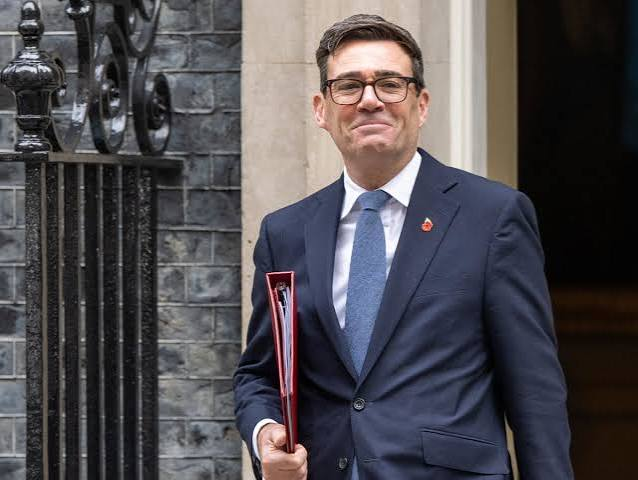
Prime Minister Andy Burnham has said Britain has lost more than it gained since leaving the European Union. He made the remarks as he prepared for a UK-EU summit this week, where London hopes to agree a package that cuts trade barriers. The comments are some of the strongest he has made on Brexit since taking office, and they have already reopened a sharp political debate.
Background: How Burnham Reached This Position
Burnham became prime minister in July, after Labour MPs forced Keir Starmer out of office. A UK-EU summit planned for that month was postponed because of the leadership change, and a new date was set for November. Since then, Burnham has gradually sharpened his language on Britain’s relationship with the bloc.
At the Labour Party conference in late September, he said Brexit had done “more harm than good.” In early October, he said he would set out options for a new relationship with Europe, and the possibility of rejoining was left open. That statement worried some Labour voters who backed Brexit, and it pleased many pro-European supporters.
What Burnham Said This Weekend
On Saturday, speaking at the Welsh Labour conference in Llandudno, Burnham said the UK had lost more than it gained over the last ten years. He argued that the Conservatives delivered a harsher and harder Brexit than voters expected when they went to the polls in 2016. He also said the Tories “burned all our bridges” with European partners after the referendum.
On Monday, he was due to repeat the message at the Lord Mayor’s Banquet at Guildhall in the City of London. According to advance excerpts of the speech, he will compare the situation to the story of the emperor’s new clothes, where nobody dares to state the obvious. He will say plainly that the Brexit the country was given has not worked.
What Is on the Table at the UK-EU Summit
The summit is due to take place on Friday in Brussels. Burnham hopes to secure agreements on food and farming, emissions trading and a youth mobility scheme. His government says these measures could raise UK economic output by about 0.4 per cent, which is roughly £17 billion.
Burnham has set three conditions for signing any deal. It must fit within the Labour manifesto and the government’s red lines. It must improve the current Brexit arrangement and move it closer to what people believed they were voting for in 2016. It must also pass what he calls the “Makerfield test,” meaning it has to bring real and visible improvements to everyday life.
Voice in the Room, but No Vote
EU relations minister Hamish Falconer has offered more detail on what closer ties could look like. He told the BBC that the UK could have a “voice in the room” under a new arrangement, but it would not get a vote on EU food policy. This reflects a basic trade-off in any closer alignment, since Britain would follow some EU rules without having a say in writing them.
Falconer also said the deal could include an exit clause. Brussels is reportedly worried that a future Reform UK or Conservative government might reverse the agreement. The clause, nicknamed the “Farage clause,” is meant to limit the damage if the political landscape changes.
Opposition and Criticism
Former prime minister Boris Johnson has strongly rejected Burnham’s approach. He told the Telegraph that Britain would “absolutely” vote for Brexit again if another referendum were held. Johnson also warned that making Brexit a political priority would hurt Burnham and his party, and he argued that voters would not be convinced.
Questions remain about the cost and practicality of border arrangements as well. Much of the infrastructure for post-Brexit food checks has been paid for by private companies, including Eurotunnel. French staff carry out the checks at Calais and Boulogne-sur-Mer. Business groups have long complained that these checks cause delays and extra costs.
Impact: Why This Matters Beyond Britain
For British businesses, especially food exporters and farmers, a deal that eases checks could lower costs and speed up trade. A youth mobility scheme would also allow young people from the UK and EU countries to live and work in each other’s territory for a set period. These are the kinds of practical gains Burnham says will pass the Makerfield test.
For Europe, a calmer relationship with its closest large neighbour could improve cooperation on trade, climate policy and security. Politically, the speech is a risk for Burnham at home. A strong Brexit message may attract pro-European voters, but it could also push Leave-backing Labour supporters towards other parties.
Conclusion: What Happens Next
All eyes now turn to Friday’s summit, where the true scope of the agreement will become clear. It is still uncertain whether both sides can settle every detail, especially the exit clause and the rules on food standards. If a deal is signed, Parliament and the public will then judge whether it delivers the gains Burnham has promised.
The larger question is how far the government wants to go. For now, Burnham says his approach is “constructive” rather than adversarial. Whether that approach leads to a deeper relationship, or to a future debate about rejoining, will depend on the outcome in Brussels and on how voters respond.
Readers can follow more developments in our World News coverage and in our Politics section, or visit the Aapka Magazine homepage for the latest reports.
Frequently Asked Questions
What exactly did Andy Burnham say about Brexit?
Andy Burnham said the UK has lost more than it has gained in the ten years since the 2016 referendum. He first made the point at the Welsh Labour conference on Saturday, and he was expected to repeat it in a speech at the Lord Mayor’s Banquet in London on Monday. In that speech, he planned to say that the Brexit the country was given has not worked. He also blamed the Conservatives for delivering a harder version of Brexit than many voters expected, and he said they damaged relations with European partners afterwards.
When is the UK-EU summit and what will be discussed?
The UK-EU summit is due to take place on Friday in Brussels. The government wants to agree measures on food and farming, emissions trading and a youth mobility scheme. Officials say these steps could raise economic output by around 0.4 per cent, or about £17 billion. The summit was originally planned for July, but it was postponed after Keir Starmer left office. Details of any final agreement will only become clear once the leaders announce the outcome.
What is the “Makerfield test” that Burnham mentioned?
The Makerfield test is a standard Burnham says any agreement with the EU must meet before he signs it. In simple terms, a deal must deliver real and visible improvements in people’s daily lives, rather than only looking good on paper. This could mean lower costs, easier trade or better opportunities for young people. It is one of three conditions he has set, alongside staying within Labour’s manifesto and red lines and bringing the arrangement closer to what voters thought they were backing in 2016.
Does Burnham want the UK to rejoin the European Union?
Burnham has not committed to rejoining the EU. In early October, he said he would set out options for a new relationship with the bloc, and he did not rule out rejoining. At the Labour conference in September, he said Brexit had done more harm than good. For now, his stated focus is on this week’s summit and on improving the current arrangement. Any promise to rejoin would be a major political decision, and it would likely face strong resistance from some voters and parties.
What is the “Farage clause” in the proposed EU deal?
The “Farage clause” is a nickname for a possible exit clause in the new agreement. According to Hamish Falconer, the EU is worried that a future Reform UK or Conservative government could undo the deal. The clause would protect both sides from the costs and disruption of a sudden reversal. The exact wording has not been published, and it may still change before the agreement is finalised or signed.
How has Boris Johnson responded to Burnham’s comments?
Boris Johnson has criticised the prime minister’s approach. He told the Telegraph that Britain would “absolutely” vote for Brexit again if a new vote were held. He also warned that making Brexit a top political priority could damage Burnham and his party, and he said voters would not be persuaded. Supporters of Burnham reply that the government is only trying to fix practical problems for businesses and families, rather than refight the 2016 referendum.
Leave a comment