

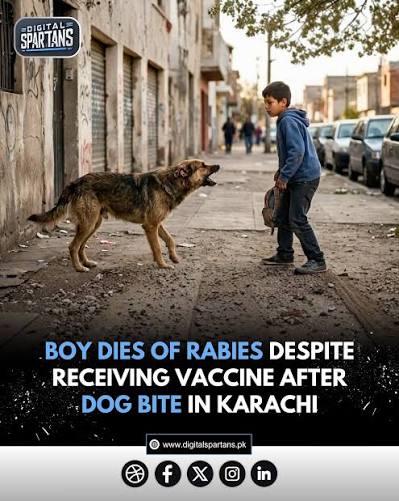
A six-year-old girl and a four-year-old boy have died of rabies at Indus Hospital Karachi after being bitten by dogs and not receiving anti-rabies vaccination in time. Their deaths have pushed Sindh’s rabies toll for the year to 37, underlining how often fatal outcomes follow when post-bite treatment is delayed or missed altogether.
Background
Rabies has remained a persistent public health concern in Sindh for years, driven largely by gaps in vaccine availability and awareness around the need for immediate post-bite treatment. Earlier reporting on the province’s rabies cases has noted that only a limited number of hospitals stock the life-saving anti-rabies vaccine and rabies immunoglobulin, a shortage that has repeatedly been linked to preventable deaths.
Indus Hospital and other major facilities in Karachi have handled thousands of dog-bite cases in recent years, with past data showing the scale of the problem: in 2024 alone, Indus Hospital treated more than 15,000 dog-bite cases and recorded eight rabies-related deaths.
Details
The two latest victims were identified as Abia, daughter of Nauman, from Hyderabad, and Waqar, son of Sultan, from Dadu. Both children were bitten by dogs, and hospital authorities confirmed that neither had been administered the anti-rabies vaccine following their bites.
Both children were later brought to Indus Hospital Karachi, where they succumbed to the disease. Their deaths bring the province’s confirmed rabies toll for the year to 37, a figure that reflects cases reported across multiple districts rather than being concentrated in one area alone.
Health experts have long stressed that rabies is almost entirely preventable if victims receive prompt post-exposure prophylaxis, which includes immediately washing the wound with soap and running water, followed by administration of the anti-rabies vaccine and, where indicated, rabies immunoglobulin. Once symptoms of the disease appear, however, rabies is considered virtually always fatal, making the window immediately after a bite critical.
Quotes
Hospital authorities confirmed that neither child had received the anti-rabies vaccine after being bitten, pointing to a gap between the bite incident and any follow-up medical care. Health experts in Sindh have repeatedly stressed the importance of immediate post-exposure treatment, noting that the course of action taken in the hours after a dog bite often determines whether a case becomes fatal.
Impact
The deaths highlight a recurring pattern in Sindh’s rabies crisis, where access to timely treatment, rather than the severity of the bite itself, frequently determines whether a case proves fatal. Rural districts such as Dadu and parts of Hyderabad have repeatedly featured in rabies case reports, reflecting broader disparities in how quickly dog-bite victims in these areas can reach facilities that stock the anti-rabies vaccine.
The rising toll also adds pressure on provincial health authorities, who have previously faced criticism for failing to implement sustained dog population management programmes, including mass vaccination and sterilisation efforts that could reduce bite incidents at the source.
Conclusion
With the toll now at 37 for the year, health officials are likely to face renewed calls to expand vaccine stock across public hospitals in both urban and rural parts of Sindh. Public health experts continue to emphasise that awareness around seeking immediate treatment after any dog bite remains one of the most effective ways to prevent further deaths in the province.
Frequently Asked Questions
What is happening with the rabies crisis in Sindh?
Sindh is dealing with a persistent rabies crisis in which dog bites that go untreated with the anti-rabies vaccine continue to result in child and adult deaths across the province. The latest cases involved a six-year-old girl from Hyderabad and a four-year-old boy from Dadu, both of whom died at Indus Hospital Karachi after being bitten by dogs and not receiving post-bite vaccination. Their deaths brought the province’s confirmed rabies toll for the year to 37, continuing a pattern seen in previous years where limited vaccine availability, particularly in rural districts, has repeatedly contributed to preventable deaths.
Why are Sindh residents facing a rabies crisis?
The crisis stems largely from gaps in access to the anti-rabies vaccine and rabies immunoglobulin, which are not stocked at many public hospitals, especially in rural parts of the province. Previous reporting has noted that only a small number of hospitals in Sindh reliably carry these treatments, forcing many dog-bite victims, particularly in districts like Dadu and parts of Hyderabad, to go without timely care. The problem is compounded by low awareness in some communities about how urgently post-bite treatment is needed, since rabies becomes almost always fatal once symptoms appear, making the period immediately after a bite the only real opportunity for prevention.
How does rabies affect daily life and public health in the province?
Beyond the direct toll in deaths, Sindh’s rabies crisis places an ongoing strain on hospitals like Indus Hospital and JPMC, which have collectively treated thousands of dog-bite cases in recent years. The crisis has also drawn criticism toward provincial authorities for not maintaining a consistent dog population management programme, such as mass vaccination and sterilisation efforts, which health experts say could meaningfully reduce bite incidents over time. For families in affected districts, the crisis translates into real anxiety around dog bites, given that access to timely treatment, rather than the severity of the bite itself, often determines whether a case proves fatal.
Leave a comment