

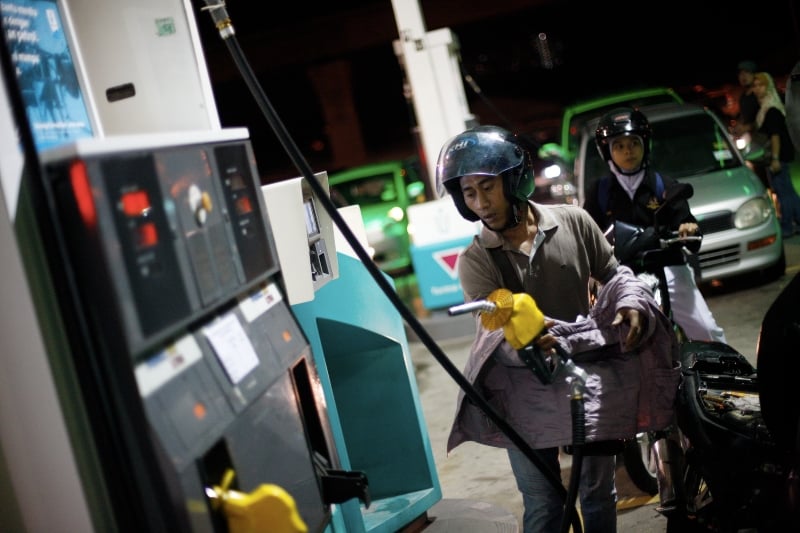
Prime Minister Shehbaz Sharif has directed authorities to relax registration rules under the federal petrol subsidy scheme so that older motorcycles and rickshaws, some of them 15 to 20 years old and still carrying their original owner’s name, don’t get locked out of the relief.
The change matters because a huge share of Pakistan’s bikes and rickshaws change hands informally over the years. Many are on their second, third or even fourth owner, but the registration paperwork was never formally transferred, which would have disqualified them under the scheme’s original terms.
Background: Why the Scheme Exists
Pakistan’s petrol prices have climbed sharply this year, driven largely by tensions in the Middle East that pushed up global oil costs. Petrol has been trading above Rs 375 a litre in recent weeks, a level that hits motorcycle and rickshaw users hardest since two- and three-wheelers make up the bulk of daily commuting for lower and middle-income households.
In response, the federal government launched a Rs 100-per-litre subsidy for motorcycles, rickshaws, Qingqis and small cars up to 800cc. The scheme rolled out first in Islamabad before extending nationwide, including Azad Jammu and Kashmir and Gilgit-Baltistan.
What’s Changed: Relaxed Rules for Older Vehicles
IT and Telecommunication Minister Shaza Fatima Khawaja confirmed the relaxation at a press conference alongside the information and petroleum ministers. She explained that because so many Pakistanis buy used bikes and rickshaws without transferring ownership on paper, the government decided the vehicle’s registration date, not the current registered name, would be used to confirm eligibility.
In practical terms, that means a bike bought secondhand a decade ago, still listed under a previous owner, won’t be turned away at registration as long as the vehicle itself checks out. This single change is expected to bring a large number of previously excluded users into the scheme.
How to Register: The App and SMS Process
Registration runs through a simple SMS-based system rather than a dedicated download-only app, which the government chose specifically to reach users in areas with limited smartphone access. Here’s the process as officials have laid it out.
Applicants send their vehicle and CNIC details via SMS to register, using a SIM that’s registered in their own name and linked to their own CNIC. PM Shehbaz has also directed that this registration SMS be made free of charge, removing even that small cost barrier for lower-income users.
Once registered, the applicant gets a confirmation message. Before heading to a petrol station, they then send “TOK” to 9771 to generate a fuel relief token, which they show at the pump to receive the discounted fuel.
Motorcycle and three-wheeler users can claim up to 20 litres a month, dispensed in batches of 5 litres per token, each carrying a Rs 500 discount. Small car owners under 800cc get up to 30 litres monthly, in 10-litre token batches worth Rs 1,000 each.
Quotes From Officials
“In this hour of difficulty, we will not leave the public alone,” Prime Minister Shehbaz Sharif said when the scheme was first announced, framing it as part of a wider effort to shield ordinary households from the fallout of global oil price shocks.
During the Islamabad rollout, the prime minister directed the city’s chief commissioner, inspector general and other local officials to stay actively present in the field, guiding citizens through registration in person rather than leaving them to figure it out alone. He also called for volunteers and public representatives to be mobilised to help people complete the process, alongside a wider media campaign explaining how registration works.
Regional Angle: Punjab and Sindh Add Their Own Relief
Beyond the federal scheme, provincial governments have layered on their own support. Punjab, under Chief Minister Maryam Nawaz Sharif, rolled out a separate Rs 2,000 monthly subsidy for registered motorbike owners, on top of scrapping registration and transfer fees entirely. Punjab residents can apply through the “Maryam Ko Batayn” app, a web portal, or the province’s 1000 helpline.
Sindh introduced its own Rs 2,000 monthly payment for registered motorcyclists as well, transferred directly to verified bank accounts, alongside waived transfer fees for bike owners in the province. Khyber Pakhtunkhwa has run a comparable relief package for its roughly 1.6 million registered motorcycle users too.
Because these are separate provincial programs layered on top of the federal fuel subsidy, eligible users in Punjab or Sindh may be able to benefit from both the litre-based petrol discount and their province’s flat monthly payment, provided they meet each program’s registration requirements.
Impact: Millions of Low-Income Commuters Affected
For most people using them, motorcycles and rickshaws are simply the cheapest way to get to work, school or the market, especially outside the big cities where public transport is patchy at best. So a subsidy that actually reaches secondhand vehicle owners, not just the minority with clean paperwork, changes who this relief realistically ends up helping.
The numbers add up too. Between the federal scheme and the provincial top-ups running in Punjab, Sindh and KP, this is now one of the wider targeted relief pushes Pakistan has put together in response to this year’s fuel price jump, and it reaches a lot further than it would have under the original paperwork rules.
Conclusion: What to Expect Next
With the SMS registration now free and the ownership-transfer requirement relaxed, officials expect a sharp rise in applications over the coming weeks, particularly from rural areas and lower-income households where vehicles are more likely to have changed hands informally. The government has said its awareness campaign will keep expanding across TV, radio and social media so eligible users don’t miss out simply because they didn’t hear about the change.
Whether the scheme gets extended further, or whether provinces introduce additional relief on top of what’s already running, will likely depend on how global oil prices move in the months ahead.
FAQs
What is the current price of petrol in Pakistan?
It’s been trading above Rs 375 per litre over the past couple of weeks, after a sharp jump tied to rising global oil prices during the Middle East tensions. Pakistan switched to a system where OGRA can revise petrol and diesel rates daily instead of every two weeks, so the number moves around, and your best bet is checking OGRA’s latest notification rather than going by a figure from a few days back. What doesn’t move is the subsidy itself: it stays a flat Rs 100 off per litre no matter where the base price lands, so the actual relief amount holds steady even as the pump price shifts.
How to check the fuel subsidy?
Send your registration details by SMS using a SIM registered in your own name and linked to your CNIC, and you’ll get a confirmation message once you’re approved for the scheme. To actually claim fuel, text “TOK” to 9771 before visiting a petrol station, which generates a token you present at the pump for your discount. If you’re in Punjab, you can also check your status through the “Maryam Ko Batayn” app or the province’s dedicated web portal, since that province runs its own subsidy layer alongside the federal one.
What is the CM Punjab petrol subsidy program?
It’s a separate provincial relief package announced by Chief Minister Maryam Nawaz Sharif, giving registered motorbike owners in Punjab a flat Rs 2,000 monthly subsidy, on top of abolishing bike registration and transfer fees across the province entirely. It runs alongside, not instead of, the federal Rs 100-per-litre petrol discount, so eligible Punjab residents can potentially benefit from both if they meet each scheme’s registration conditions. Applications go through the “Maryam Ko Batayn” app, the province’s web portal, or by calling the 1000 helpline.
Leave a comment