

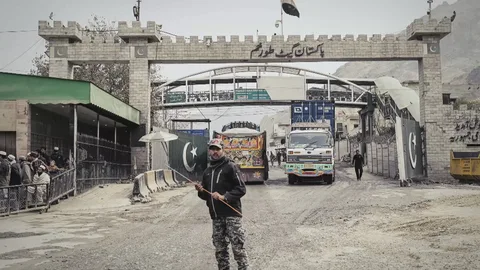
Relations between Pakistan and Afghanistan’s Taliban government have grown noticeably tenser over the past year, driven largely by a wave of cross-border attacks that Islamabad says are being planned and launched from Afghan territory. Pakistani officials have escalated their language at international forums, warning that continued inaction from Kabul will force a stronger response.
This isn’t a new complaint. But the tone coming out of Islamabad lately has shifted from routine diplomatic protest to something closer to an explicit warning, one delivered directly to the UN Security Council rather than through backchannel diplomacy alone.
Background: How We Got Here
Since the Taliban retook control of Afghanistan, Pakistan has watched groups like the Tehreek-i-Taliban Pakistan grow bolder, carrying out attacks on security forces and civilians inside Pakistani territory. Islamabad has long argued that TTP fighters use Afghan soil as a base, moving back and forth across a border that’s difficult to fully secure given its terrain and length.
Kabul, for its part, has generally rejected the accusation that it’s harbouring or supporting these groups. That disagreement has hardened into a genuine diplomatic rift, one that’s occasionally spilled over into direct military exchanges between the two sides’ forces along the frontier.
Pakistan has also pointed to other armed groups operating from Afghan territory, not just the TTP, painting a picture of a border region that’s become harder to manage the longer the underlying dispute goes unresolved.
The Current Standoff
Pakistani officials have described a sharp rise in attacks over the past several months, with weapons abandoned by departing foreign forces reportedly ending up in militant hands. That detail matters because it shifts some of the blame narrative: Pakistan isn’t just accusing the Taliban of tolerance toward militants, it’s tying the current wave of violence to leftover military hardware from the previous conflict.
Diplomatically, Pakistan has kept its language calibrated. Officials talk about self-defence and proportionate response rather than outright confrontation, and they’ve repeatedly said they’d prefer dialogue with Kabul over further military action. Still, the underlying message is unmistakable: patience is running out.
There’s also a domestic angle worth noting. Pakistani security forces have absorbed real casualties from these attacks, and public pressure at home has pushed the government toward a more visibly assertive stance, both militarily and diplomatically.
Quotes and Statements
Pakistani officials have used consistent language across multiple statements, describing the country’s posture as defensive rather than aggressive. One Foreign Office briefing put it plainly, saying Pakistan would respond “swiftly and strongly” if security threats persist.
At the UN, the message was framed slightly differently but pointed in the same direction, with officials stressing that any response would remain grounded in international legal norms rather than open-ended military action.
Regional Impact
A prolonged standoff between Pakistan and Afghanistan carries consequences well beyond the two countries themselves. Trade routes through the region have already been disrupted by border tensions, hitting communities on both sides that depend on cross-border commerce for their livelihoods.
The situation also complicates broader counterterrorism cooperation in South and Central Asia. Groups like Daesh-Khorasan and Al-Qaeda affiliates have historically exploited exactly this kind of friction between neighbouring governments, using gaps in coordination to operate with less scrutiny.
Refugee flows add another layer of strain. Ongoing instability makes it harder to manage the return of Afghan refugees currently in Pakistan, a process that was already politically sensitive before tensions escalated further.
What to Watch Going Forward
The near-term picture depends heavily on whether attacks inside Pakistan continue at their recent pace. If they do, further Pakistani strikes inside Afghan territory look likely, regardless of the diplomatic language both sides continue to use in public.
Longer term, the real question is whether any international mechanism, the UN included, can actually pressure the Taliban government into concrete action against groups operating from its territory. So far, statements and warnings haven’t translated into much visible change on the ground.
FAQs
Is self-defense legal in Pakistan?
Yes, both under Pakistani domestic law and international law. Article 51 of the UN Charter recognises a state’s inherent right to act in self-defence if it comes under armed attack, and Pakistan has cited this provision repeatedly when justifying cross-border operations against militant targets it says are responsible for attacks on its territory. Legal scholars note that the scope of this right becomes more contested when a state acts inside another country’s borders without that country’s consent, which is part of why Pakistani officials have been careful to frame their statements around restraint, proportionality, and adherence to international humanitarian law rather than open-ended military action.
Does Pakistan have an air defense system?
Pakistan maintains a multi-layered air defence setup that combines radar surveillance, missile batteries, and dedicated interceptor aircraft under the control of the Pakistan Air Force. The network is designed to provide early warning and rapid response capability along the country’s borders, including the western frontier with Afghanistan. Pakistan has invested in modernising parts of this system over recent years, incorporating both domestically developed technology and equipment sourced from international defence partners, though the full technical details remain classified for obvious security reasons.
What is the best self-defense weapon in Pakistan?
There’s no single “best” answer here since it depends entirely on the person’s circumstances, local legal restrictions, and what they’re actually trying to protect against. Licensed firearms, primarily pistols and shotguns, remain the most common option for those who go through the legal process to obtain them, which involves provincial licensing authorities and varies depending on where in Pakistan someone lives. For people who prefer non-lethal options, pepper spray, personal alarms, and basic self-defence training are widely available and generally involve far fewer legal hurdles. Anyone weighing these options should check current provincial firearm laws directly, since rules around licensing and permitted weapons do change.
Leave a comment