

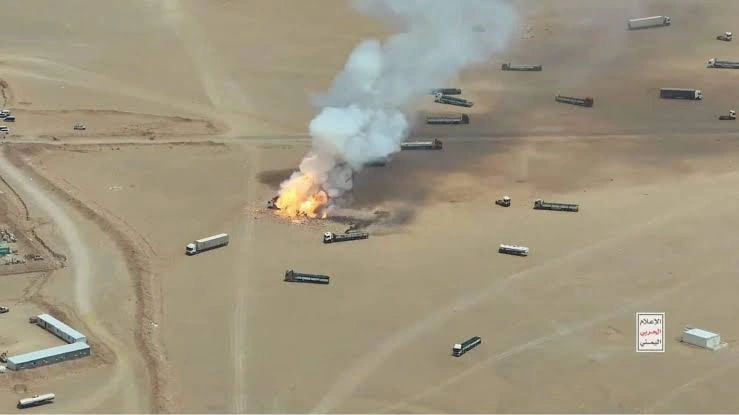
Saudi Arabia Faces Growing Pressure From Houthi Attacks
RIYADH: Saudi Arabia Houthi attacks have created difficult choices for the Gulf kingdom as the Iran-backed Houthi movement expands its presence in Yemen and increases pressure on Saudi Arabia.
Experts say Riyadh does not want an all-out war, but the escalating Saudi Arabia Houthi attacks could eventually drag the kingdom into a wider regional conflict.
Mohammed Al-Basha, a Yemen expert and Washington-based risk adviser, said the latest developments increasingly point toward a possible large-scale Saudi response. He said Riyadh may have limited options as Saudi Arabia Houthi attacks continue to intensify.
Houthis Expand Control Near the Red Sea
The Houthis recently captured strategic Perim Island at the entrance to the Red Sea as well as the port town of Mocha, seeking to strengthen their position around the Bab al-Mandeb Strait, one of the world’s key shipping and energy routes.
The situation became more concerning for Riyadh after Saudi Arabia’s key oil pipeline was shut down following a drone attack. No group immediately claimed responsibility, while US President Donald Trump blamed Iran and cited Iranian-backed groups operating in Iraq.
Saudi Arabia has increasingly relied on its East-West oil pipeline after the conflict with Iran effectively disrupted shipping through the Strait of Hormuz. The route allows Saudi Arabia to redirect millions of barrels of oil that would otherwise travel through the Persian Gulf.
Riyadh Faces Difficult Choices
The latest developments have renewed concerns in Riyadh about coordinated attacks involving Iraqi militias and Iran-backed Houthis. For Saudi Arabia, the continuing Saudi Arabia Houthi attacks present both a security challenge and a major threat to critical energy infrastructure.
Despite possessing a modern military and significant financial resources, Saudi Arabia has struggled to completely neutralize the Houthis. The Yemeni group has spent years developing its military capabilities and combat tactics.
The Houthis are widely regarded by Western and Gulf governments as an Iran-backed movement, although the group also maintains its own political and military objectives.
The group has gained support in parts of the Middle East after launching attacks against Israel following the Gaza war. At the same time, the Houthis continue to demand an end to Saudi efforts to isolate areas of northern Yemen under their control through air and economic restrictions.
As Saudi Arabia Houthi attacks continue to shape the regional security situation, Riyadh faces a difficult balancing act between responding to growing threats and avoiding a broader war with potentially severe consequences for the Gulf and global energy markets.
Leave a comment