
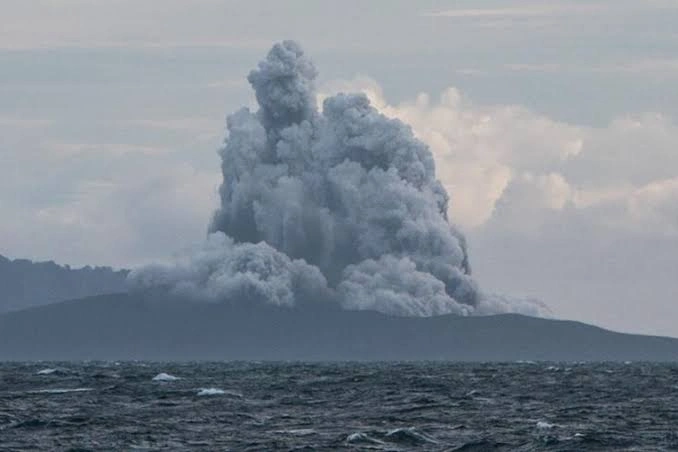

JAKARTA, September 7, 2026: Around 270,000 passengers have been stranded across Indonesia after the eruption of Anak Krakatau disrupted air travel, grounding more than 2,000 flights and forcing several airports to suspend operations for a second consecutive day.
The volcano, located around 150 kilometres (90 miles) from Jakarta, began erupting late Friday, producing lava fountains and sending volcanic ash toward the capital and Lampung province.
Anak Krakatau remained seismically active throughout the weekend, raising concerns over continued ash emissions and their impact on aviation.
Soekarno-Hatta International Airport in Jakarta was scheduled to reopen at 6pm local time on Monday but remained closed because volcanic ash continued to affect airspace around the airport.
In a statement, airport authorities said flight operations would now resume at 11:59pm on Monday, subject to safety conditions.
The smaller Halim Perdanakusuma Airport, which handles both civilian and military flights, will also remain closed until the same time.
The continued closures have caused widespread disruption for travellers, with thousands unable to reach their destinations.
Long queues formed inside the departure halls of Soekarno-Hatta International Airport on Monday as stranded passengers sought refunds, rebooking options and information about when flights would resume.
Airlines have faced significant pressure as passengers try to rearrange travel plans following the widespread cancellations and delays.
The disruption has affected both domestic and international services, with the volcanic ash posing a serious risk to aircraft engines and making flight operations unsafe.
Volcanic ash can severely disrupt aviation because fine particles can damage aircraft engines and reduce visibility for pilots.
Authorities have therefore continued monitoring the volcano and surrounding airspace before allowing normal flight operations to resume.
The Anak Krakatau eruption has already created major challenges for Indonesia’s aviation network, with more than 2,000 flights grounded and approximately 270,000 passengers affected.
Officials are expected to assess conditions before reopening airports and restoring normal flight schedules.
Anak Krakatau is located in the Sunda Strait, between Indonesia’s Java and Sumatra islands. The volcano emerged from the sea after the catastrophic 1883 eruption of Krakatoa, one of the most powerful volcanic eruptions in recorded history.
The latest eruption has renewed attention on volcanic hazards in Indonesia, an archipelago located along the Pacific Ring of Fire and home to numerous active volcanoes.
With Anak Krakatau continuing to show seismic activity, authorities are closely monitoring ash emissions and their potential impact on nearby communities and aviation.
For now, passengers travelling through Jakarta and other affected airports have been advised to check with their airlines for the latest flight information and possible cancellations before heading to the airport.