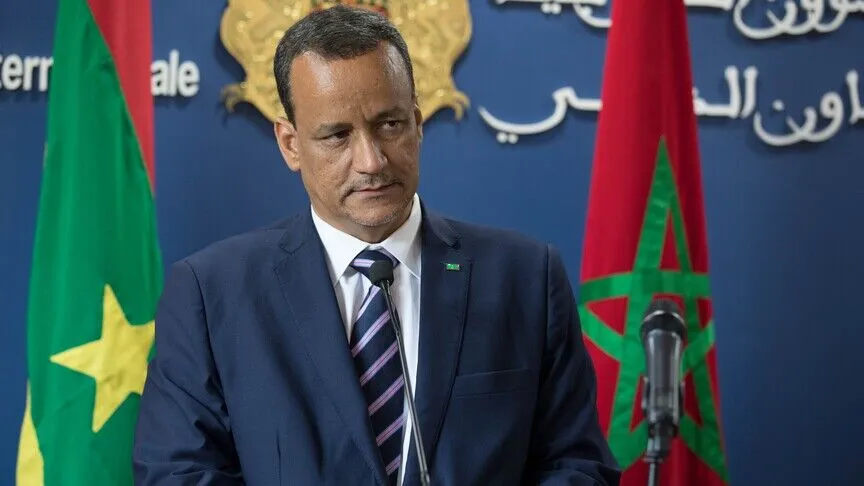

Mauritanian diplomat Ismail Ould Cheikh Ahmed has been elected the new Secretary General of the Organisation of Islamic Cooperation, succeeding Chad’s Hissein Brahim Taha at a foreign ministers’ meeting in Jeddah, Saudi Arabia. Pakistan’s Deputy Prime Minister and Foreign Minister Ishaq Dar was among the first officials to congratulate Saudi Arabia’s foreign minister on the consensus vote.
Background
The election took place at the 23rd Extraordinary Session of the OIC Council of Foreign Ministers, held at the organisation’s headquarters in Jeddah. Foreign ministers and representatives from OIC member states gathered to select the new leader and to discuss ongoing developments in the occupied Palestinian territories, including Gaza and Al-Quds.
Ould Cheikh Ahmed, 66, brings decades of diplomatic and humanitarian experience to the role. He previously served as Mauritania’s foreign minister from 2018 to 2022 and held several senior United Nations positions, including UN Special Envoy for Yemen and humanitarian coordinator roles in Syria and Libya. He succeeds Hissein Brahim Taha, whose term as OIC Secretary General officially ends in November after nearly five years in the post.
Details
What Is the OIC? Introduction of OIC
The Organisation of Islamic Cooperation is the second-largest intergovernmental body in the world after the United Nations, representing 57 member states across four continents. Founded in 1969, the OIC describes its mission as safeguarding the interests of the Muslim world and promoting international peace, harmony, and cooperation among its member countries.
For anyone looking for a short introduction of OIC, the organisation acts as the collective voice of the Muslim world on issues ranging from Palestinian statehood to economic cooperation, humanitarian response, and interfaith dialogue. Its headquarters, known as the OIC Secretariat, is based in Jeddah, Saudi Arabia, and coordinates the organisation’s day-to-day diplomatic and administrative functions.
Term of OIC Secretary General
The term of OIC Secretary General typically runs for five years, following a pattern set by past leadership transitions. Ould Cheikh Ahmed’s predecessor, Hissein Brahim Taha, was elected in November 2020 and formally took office in late 2021, with his term concluding this November, roughly five years after his election. This latest transition follows that same established timeline.
OIC Organs and Structure
The OIC operates through several main organs. These include the Islamic Summit, made up of heads of state and government, which serves as the organisation’s highest authority; the Council of Foreign Ministers, which meets regularly to set policy direction, as it did during this latest secretary-general election; and the General Secretariat, headed by the Secretary General, which handles the organisation’s executive and administrative work between summits.
Beyond these central organs, the OIC also includes a range of specialized and affiliated institutions covering areas such as trade, education, and Islamic development finance. That reflects just how broad the organisation’s mandate really is, well beyond purely political and diplomatic matters.
Quotes
Deputy Prime Minister Ishaq Dar extended what he described as warmest felicitations to Ould Cheikh Ahmed following the election, expressing hope that the new secretary-general’s tenure would bring renewed energy to the OIC as a platform for collaborative dialogue and collective action among member states.
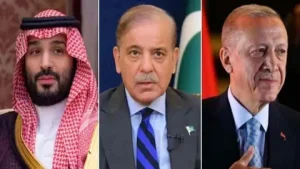
Dar also spoke separately with Saudi Foreign Minister Prince Faisal bin Farhan Al Saud, with the two ministers discussing regional developments and matters of mutual interest, including an upcoming meeting of the R4 grouping involving Pakistan, Saudi Arabia, Türkiye, and Egypt.
The OIC’s own statement following the vote said Ould Cheikh Ahmed was elected with unanimous support and would now assume leadership of what the organisation described as joint Islamic action across its member states.
Impact
The leadership transition carries significance for the broader Muslim world at a moment when the OIC continues to face pressure over its response to the situation in Gaza and the occupied Palestinian territories. Ould Cheikh Ahmed’s extensive humanitarian background, including his prior UN role focused on Yemen, may shape how the organisation approaches ongoing regional crises during his tenure.
For Pakistan specifically, continued engagement with the OIC remains an important part of its foreign policy, particularly as Islamabad deepens coordination with Saudi Arabia, Türkiye, and Egypt through the R4 framework launched earlier this year to address regional security concerns, including the conflict involving the United States and Iran.
Conclusion
With Ould Cheikh Ahmed set to formally take over once Taha’s term concludes in November, attention will turn to how the new secretary-general positions the OIC on pressing regional issues, particularly the Palestinian question, in the months ahead. His background in humanitarian diplomacy hints at a possible shift in tone from his predecessor, though how that plays out in concrete OIC policy will become clearer once he’s officially in office.
Frequently Asked Questions
Who is the current Secretary General of the OIC?
As of the latest election, Ismail Ould Cheikh Ahmed of Mauritania has been elected as the new Secretary General of the Organisation of Islamic Cooperation, though he will formally take office once the current secretary-general, Chad’s Hissein Brahim Taha, completes his term in November. Ould Cheikh Ahmed previously served as Mauritania’s foreign minister and held several senior United Nations roles, including Special Envoy for Yemen, giving him substantial diplomatic and humanitarian experience heading into the position.
In which country will the OIC Summit be held in 2026?
Specific host country details for the next full OIC Islamic Summit have not been confirmed in connection with this latest secretary-general election, since summit hosting decisions are typically announced separately by the OIC Secretariat closer to the event date. The organisation’s headquarters and many of its ministerial-level meetings, including this recent extraordinary session that elected Ould Cheikh Ahmed, are regularly held in Jeddah, Saudi Arabia, though full Islamic Summits have historically rotated among different member states.
Is Pakistan a member of the OIC?
Yes, Pakistan is a founding member of the Organisation of Islamic Cooperation, having joined when the organisation was established in 1969. Pakistan has remained an active participant in OIC affairs ever since, regularly sending its foreign minister to key meetings and ministerial sessions, including this latest gathering in Jeddah where Deputy Prime Minister and Foreign Minister Ishaq Dar engaged directly with Saudi