
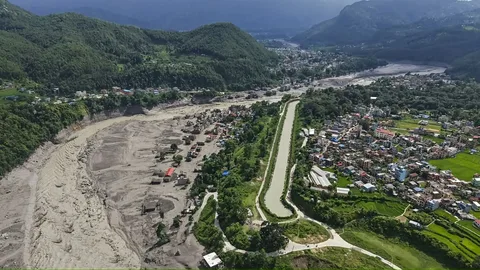

A catastrophic flood on the Nepal Tibet border has left more than 1,300 people missing and at least 165 dead in Nepal alone, after a glacial collapse triggered a torrent of water and mud that swept through valley communities on both sides of the frontier. Rescue teams are racing against time as hopes fade for hundreds of foreign tourists caught in the disaster.
Background
The disaster struck Wednesday when a glacial lake collapse sent a massive torrent of floodwater and debris down the Lhende Khola river system, devastating towns and villages along the mountainous border between Nepal and China’s Tibet region. Nepal’s National Disaster Risk Reduction and Management Authority confirmed the death toll had risen to 165 by Thursday, with 826 people still listed as missing.
This is not the first time the area has been hit. The same river system flooded once before within the past 14 months, and scientists studying the region say the increasingly unstable Himalayan ice system now poses a growing threat to communities, infrastructure, and water supplies across one of the world’s most densely populated mountain regions.
Details
How the Nepal Tibet Flood Unfolded
Residents described the flood arriving with almost no warning. One local resident in Dhunge bazaar said the water surged through the market within half an hour of anything seeming unusual, destroying shops and sweeping away people who were simply heading to work that morning. The suddenness of the collapse left little time for evacuation in several affected villages.
On the Chinese side of the border, officials in Tibet’s Gyirong county reported a mudslide at a land border crossing that left 558 people missing, including 260 foreign nationals. Chinese state broadcaster CCTV said at least three people had been confirmed dead there, with two villagers rescued from the debris so far. It remains unclear whether Chinese and Nepali authorities are counting some of the same missing individuals in their separate tallies.
Foreign Tourists Caught in the Nepal Tibet Border Flood
A significant number of those missing are foreign tourists and pilgrims who were traveling through the region, which is popular with trekkers and religious travelers heading to Mount Kailash, a site considered sacred in Hinduism, Buddhism, Jainism, and the Bon religion. Nepal’s tourism board said 133 of the missing were Indian nationals on pilgrimage to the site, alongside 47 Americans, 34 Australians, 33 Britons, and 24 Canadians.
Among those caught in the flood was a group of 77 pilgrims returning from Mount Kailash who were reportedly at a border immigration station in Gyirong when the water hit. Spiritual leader Sadhguru, whose Isha Foundation organized the group’s pilgrimage, said there had been no official word yet on their whereabouts, and that his organization stood ready to assist rescue efforts despite the risks involved.
Nepal Tibet Flood News: Rescue Operations Underway
Search and rescue teams have been working through difficult mountain terrain to reach affected communities, with earthmoving equipment deployed to clear debris and search for survivors and bodies. Communication networks and electricity supplies across parts of the affected region have been severely disrupted, further complicating efforts to confirm the status of those still unaccounted for.
Quotes
Nepali resident Shoyam Rajbhandari, describing the moment the flood hit Dhunge bazaar, said the water arrived so quickly that people had no idea how many others were missing or dead in the immediate aftermath, since the market was overwhelmed within minutes.
Australia’s Foreign Minister Penny Wong confirmed that at least 34 Australian nationals remained missing, telling reporters that those affected had been part of separate pilgrimage and tour groups traveling through the region at the time of the disaster.Tourism board spokesperson Sunil Sharma detailed the nationalities of missing foreign travelers, noting that the largest single group came from India, with many on religious pilgrimage to Mount Kailash when the flood struck.
Impact
The scale of this disaster carries significant regional and international weight, given the number of foreign nationals from at least 28 countries caught up in the flooding. Governments including the United States, Australia, Britain, Canada, Malaysia, and Ukraine have all confirmed they are working with local authorities to establish the status of their citizens.
The disaster has also renewed concern among climate scientists about the stability of glacial lakes across the Himalayas, a region already considered highly vulnerable to sudden glacial lake outburst floods as rising temperatures accelerate ice melt. Repeated flooding of the same river system within just over a year has raised pointed questions about whether current monitoring and early-warning systems in the region are adequate.
For Nepal specifically, the disaster adds further strain to a country still recovering from previous natural disasters, while raising fresh questions about infrastructure resilience in areas that depend heavily on tourism and pilgrimage traffic.
Conclusion
With hundreds still unaccounted for and search operations ongoing in difficult terrain on both sides of the border, officials in Nepal and China are expected to give updated casualty figures in the coming days. The disaster will likely intensify calls for stronger glacial monitoring systems and better early-warning infrastructure across the Himalayan region as climate-related flood risks keep growing.
Frequently Asked Questions
Where is the Nepal-Tibet border?
The Nepal-Tibet border runs along the southern edge of the Tibetan Plateau in the Himalayas, separating Nepal from China’s Tibet Autonomous Region. This latest disaster struck near the Gyirong county border crossing on the Chinese side and the Bhote Koshi and Lhende Khola river valleys on the Nepali side, an area known for its dramatic mountain terrain and its popularity with trekkers and pilgrims traveling to and from sacred sites such as Mount Kailash.
Where did floods happen in Pakistan?
While this particular disaster struck the Nepal-Tibet border rather than Pakistan, Pakistan has also faced its own recurring flood crises in recent years, particularly during monsoon seasons when heavy rainfall combines with glacial melt in the country’s northern mountain regions. Historically, Pakistan’s worst flooding has affected provinces including Sindh, Punjab, Balochistan, and Khyber Pakhtunkhwa, with rivers such as the Indus overflowing and causing widespread displacement, though this Nepal-Tibet flood event is a separate and distinct disaster unrelated to Pakistan’s own monsoon flood patterns.
Does Nepal have floods?
Yes, Nepal experiences flooding regularly, particularly during monsoon season and following glacial lake outburst events in its mountainous northern regions. The country’s steep terrain and numerous glacier-fed rivers make it especially vulnerable to sudden flash floods, landslides, and glacial collapses, with previous major flooding events recorded in areas near Mount Annapurna and elsewhere in the Himalayas. This latest disaster, triggered by a glacial collapse along the Lhende Khola river system, is part of a troubling