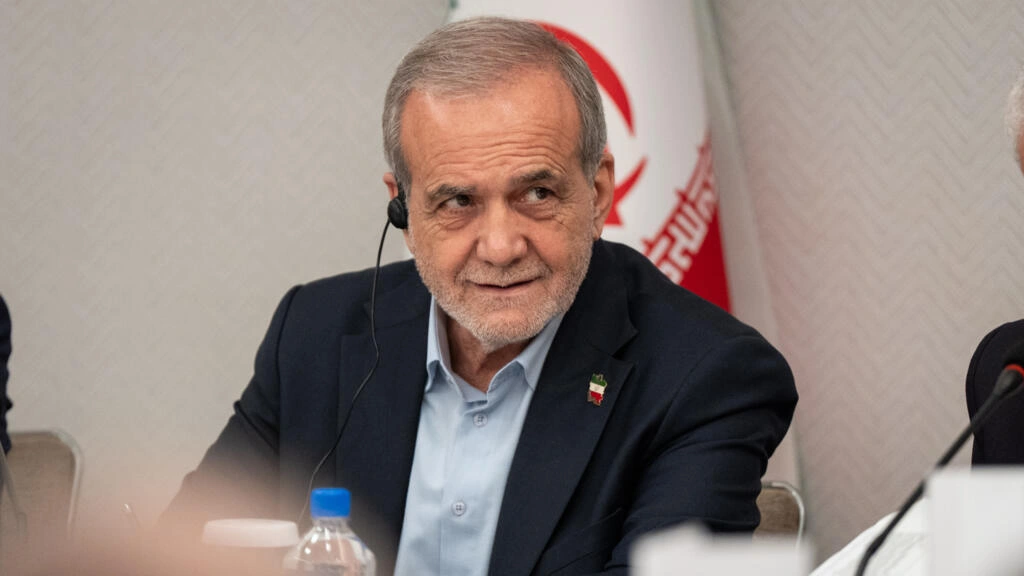

TEHRAN: Iranian President Masoud Pezeshkian has acknowledged that people across the country are facing “many problems” as the United States intensifies its economic pressure on Tehran with a new wave of sanctions.
Speaking in a televised address on Sunday, Pezeshkian said the government was working to reduce the difficulties affecting Iranian society.
“I understand we have many problems in society right now. We are trying to prevent these as much as we can,” Pezeshkian said.
His remarks came shortly after the United States announced a new sanctions campaign designed to further isolate Iran’s economy and increase pressure on the Iranian government.
The latest US sanctions campaign represents another escalation in tensions between Washington and Tehran.
US officials said last week that the new measures were intended to increase pressure on the Iranian regime, with Washington using increasingly forceful language about its objectives.
Pezeshkian responded by describing the situation as a “full-scale economic, military and security war”, attributing the heightened pressure to US President Donald Trump.
“He says he is imposing the most crushing and terrifying sanctions on Iran,” Pezeshkian said.
The Iranian president’s comments reflect the growing economic pressure facing the country as sanctions restrict access to international markets and increase challenges for businesses and consumers.
Inflation and Cost of Living Fuel Public Concerns
Iran has experienced repeated waves of public protests in recent years, with economic difficulties frequently playing a central role.
High inflation, fluctuations in the national currency and declining purchasing power have placed pressure on household finances.
At the end of December last year, protests initially linked to the rising cost of living developed into wider demonstrations criticizing Iran’s leadership.
The unrest highlighted deep public frustration over economic conditions and the government’s handling of the country’s financial challenges.
Iranian authorities reported that more than 3,000 people were killed during the unrest and accused the United States and Israel of helping orchestrate the violence.
Foreign-based non-governmental organisations, however, disputed the government’s account and said security forces had carried out a broad crackdown that resulted in thousands of deaths.
The conflicting accounts have added to international scrutiny of Iran’s domestic political and economic situation.
In his Sunday speech, Pezeshkian acknowledged several of the major challenges facing Iranian citizens.
He said the government was working to tackle inflation, unemployment and problems affecting people’s livelihoods, while seeking to provide a more secure future for the population.
“We are striving with all our hearts to overcome inflation, livelihood problems, unemployment, and to secure the future of the people, so that they can live with dignity and pride,” Pezeshkian said.
The comments come as Tehran faces the combined pressure of domestic economic difficulties and increasingly severe international sanctions.
The latest US measures could add further pressure to Iran’s already strained economy, potentially affecting trade, investment, currency stability and household purchasing power.
For the Iranian government, easing economic hardship remains a major domestic challenge as it attempts to maintain economic stability under sanctions.
For Washington, the latest campaign represents an effort to increase pressure on Tehran and force changes in Iranian policy.
The intensifying sanctions and Iran’s economic difficulties are likely to keep relations between the two countries tense, while ordinary Iranians remain at the centre of the economic impact.