
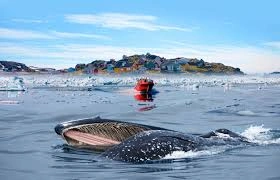

The disappearance of sea ice along East Greenland is opening previously inaccessible coastal waters to giant whales, according to a decades-long scientific study that has documented hundreds of marine mammals feeding in the region.
Researchers have recorded and filmed humpback, minke and fin whales gathering in waters that were historically covered by thick sea ice during the summer months. The changing conditions are allowing these enormous marine mammals to enter areas where they were previously unable to reach.
Scientists say the phenomenon is another example of how climate change is reshaping Arctic ecosystems, with warmer seas and shrinking ice creating new opportunities for some marine species.
Melting Ice Opens New Feeding Grounds
For generations, heavy sea ice prevented many large whales from accessing parts of the East Greenland coast. As the Arctic warms and seasonal sea ice retreats, those barriers are disappearing.
The long-term study has captured hundreds of whales feeding in newly accessible, ice-free waters. Researchers describe these gatherings as seasonal Arctic “feeding frenzies”, with whales taking advantage of the increased access to productive feeding areas.
Humpback, minke and fin whales have all been observed using the changing marine environment during summer.
The findings suggest that the disappearance of sea ice is not simply reducing habitat. It is also reorganising where marine species can travel, feed and compete for resources.
Climate Change Is Reshaping the Arctic Ocean
Scientists say the whale activity forms part of a broader regime shift in the ocean environment around East Greenland.
As temperatures rise, sea ice is retreating and marine ecosystems are changing. Species that were previously restricted by ice are gaining access to new areas, potentially altering food chains and interactions among predators and prey.
The arrival of large whales in East Greenland demonstrates how quickly some marine animals can respond to changing environmental conditions.
However, scientists caution that such adaptations do not mean climate change is harmless. Changes in sea ice can have complex consequences across the Arctic ecosystem, affecting species that depend directly on frozen seas as well as those benefiting from newly ice-free waters.

The long-term observations provide an important window into the rapidly changing Arctic. The emergence of seasonal whale feeding grounds along East Greenland shows that melting sea ice is fundamentally changing the region’s marine environment, creating a very different ecosystem from the one scientists observed in previous decades.