
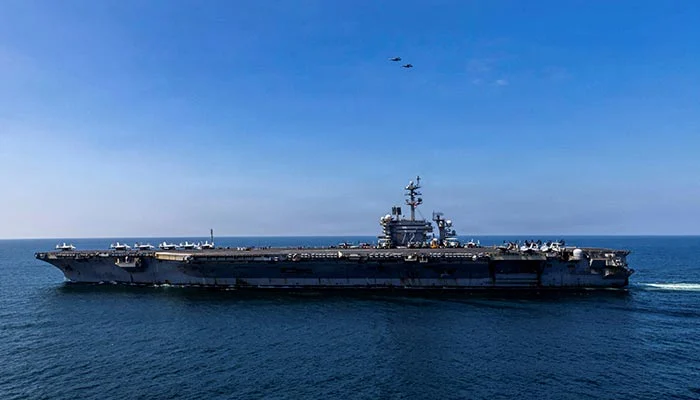

WASHINGTON: Conditions aboard the USS Abraham Lincoln are reportedly becoming increasingly difficult as the US aircraft carrier enters its ninth month at sea amid the ongoing Iran war, with concerns ranging from shortages of basic supplies and deteriorating sanitation to serious mental health pressures among sailors.
The aircraft carrier, which has been deployed for far longer than the Navy’s typical six-month operational cycle, is expected to be replaced in the Middle East by the USS George Washington. The planned rotation is likely to bring relief to the Lincoln’s crew and their families, who have faced an extended period of demanding combat operations.
Reports of worsening conditions aboard the carrier have also prompted members of Congress to seek answers from US Defense Secretary Pete Hegseth. Hegseth, however, has rejected what he described as an inaccurate portrayal of the situation and insisted that conditions aboard the vessel have been “misrepresented.”
Jonathan Schroden, chief research officer at the Centre for Naval Analyses, said prolonged deployments can place considerable physical and psychological pressure on sailors. He noted that life aboard an aircraft carrier is challenging even during peacetime because crew members work long hours in confined spaces and have limited opportunities for fresh air, exercise and adequate rest.
The pressure can become significantly greater when a carrier is involved in combat operations, particularly when sailors know their vessel could come under attack. Schroden said the combination of prolonged deployment, difficult working conditions and the stress of combat can create serious challenges for crew welfare.
The USS Abraham Lincoln left California in November 2025 for a deployment in the South China Sea. It was later redirected toward the Middle East ahead of US and Israeli attacks on Iran that began in late February, extending its operational commitment well beyond the period originally expected.
According to Schroden, US carrier strike groups are generally designed around deployments of roughly six months, partly because of concerns about the welfare of sailors. Extending deployments for significantly longer periods can create additional problems for both personnel and the Navy’s wider operational schedule.
He said prolonged deployments can also contribute to higher maintenance costs and reduce the time available to prepare ships for their next mission. Extended periods at sea may therefore affect not only sailors’ wellbeing but also the Navy’s long-term readiness.
Particularly serious concerns have emerged over reports of suicide attempts aboard the Abraham Lincoln. The Navy Times reported that two sailors allegedly attempted to jump from the carrier, highlighting the severe mental and emotional pressures that can accompany extended deployments.
The reports have intensified calls for greater attention to the welfare of service members serving aboard US warships. While aircraft carriers are designed to sustain large crews during lengthy missions, prolonged combat deployments can place extraordinary demands on sailors, particularly when normal rest, recreation and resupply opportunities are limited.
The expected arrival of the USS George Washington is therefore being closely watched by the Lincoln’s crew and their families. A change in carrier deployment could provide the sailors with an opportunity to return home after months of continuous service while allowing the Navy to address maintenance, readiness and personnel concerns surrounding the extended mission.