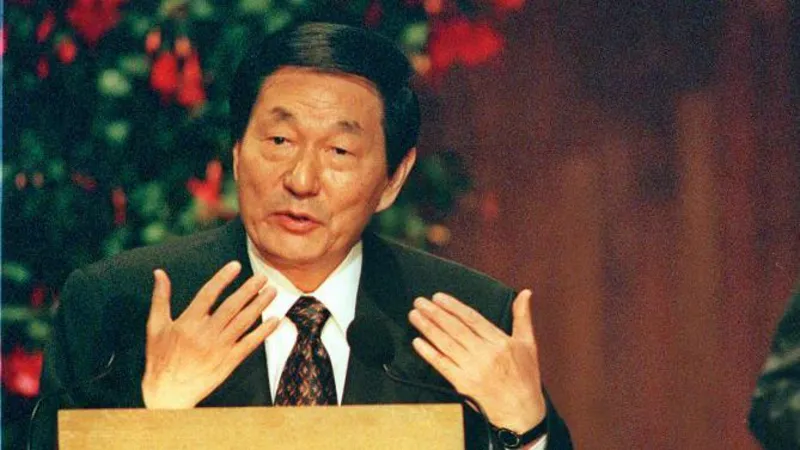

Former Chinese Premier Zhu Rongji, one of the leading figures behind China’s economic transformation and integration into the global economy, has died at the age of 97.
Zhu served as premier from 1998 to 2003, a crucial period when China accelerated economic reforms, expanded international trade and attracted increasing levels of foreign investment.
Key Role in China’s WTO Entry
Zhu played a central role in securing China’s membership in the World Trade Organization (WTO), a historic step that opened the country’s rapidly growing manufacturing sector to global markets.
China’s entry into the WTO helped boost exports, encouraged international companies to invest in the country and accelerated its development into a major manufacturing centre.
Champion of Economic Reform
During his political career, Zhu became known for pursuing difficult economic reforms.
He supported stronger control of public finances by the central government, pushed for the restructuring and closure of inefficient state-owned enterprises and backed reforms that expanded private home ownership.
Many of these measures transformed China’s economic structure but also created significant challenges for workers and communities affected by the restructuring of state industries.
A Blunt and Pragmatic Leader
Zhu developed a reputation as a direct, tough and pragmatic politician who was willing to openly discuss China’s problems.
He frequently warned about corruption, inequality and abuses of power among local officials.
In a 1998 speech, he cautioned that China faced several potential crises, pointing to public dissatisfaction, corruption and the widening gap between rich and poor.
His outspoken style also produced memorable remarks. He once criticised rogue bankers as “half-wits” and sharply condemned weaknesses in flood-control infrastructure along the Yangtze River.
Helping Reshape Modern China
Zhu’s leadership came during a period of rapid economic growth that fundamentally changed China’s position in the world.
His policies helped strengthen the country’s financial system, restructure struggling state enterprises and deepen China’s links with international markets.
The reforms contributed to China’s emergence as a global manufacturing and trading powerhouse, marking a major shift from its earlier position as a relatively isolated economy.
A Significant Legacy
Zhu Rongji leaves behind a complex but influential economic legacy.
Supporters credit him with helping stabilise China’s economy and preparing the country for a new era of globalisation. Critics have pointed to the social costs associated with state-sector restructuring and other reforms.
Nevertheless, his role in China’s economic opening remains significant. His tenure helped establish many of the foundations on which China’s later economic expansion was built.
Zhu’s death at 97 marks the passing of a former premier who played a defining role in one of the most consequential periods of China’s economic transformation.