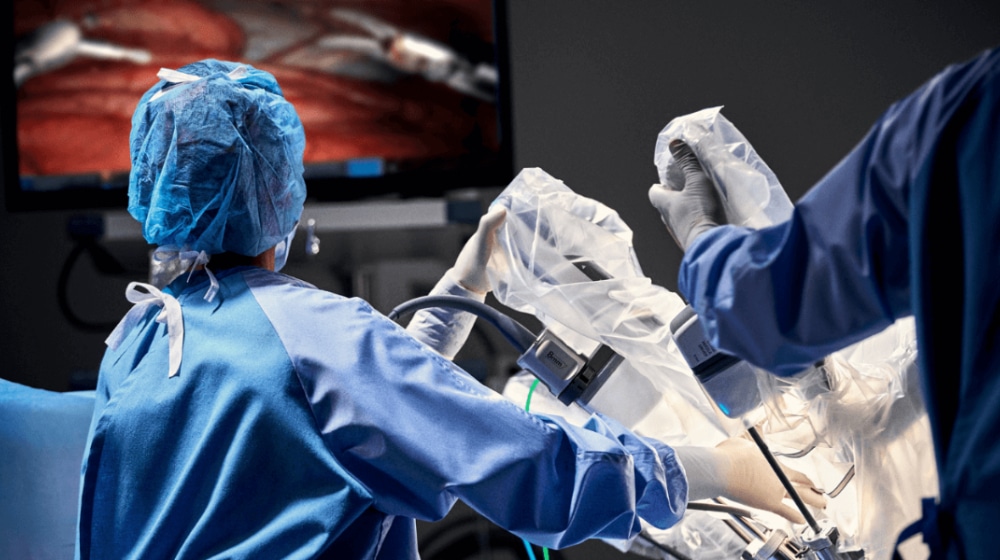

KARACHI: The Sindh High Court (SHC) has disposed of two identical constitutional petitions challenging the procurement of robotic surgical systems for government hospitals, observing that the matter has already been brought before the National Accountability Bureau (NAB) and falls outside the scope of the court’s constitutional jurisdiction.
A two-member constitutional bench, headed by Justice Yousuf Ali Sayeed, ruled that the procurement process had already been completed, with the robotic surgical systems installed and commissioned at the concerned hospitals. As a result, the court held that the primary relief sought by the petitioner had effectively become infructuous.
The petitions were filed in 2024 by Khawar Mehmood Afridi, who alleged that government officials and private companies had caused financial losses to the national exchequer by procuring robotic surgical systems for Liaquat University Hospital (LUH) and other public health facilities at highly inflated prices.
The petitioner claimed that the procurement process was irregular and sought the cancellation of the contracts. He also requested the court to direct the Sindh government to ensure transparent procurement of essential medical equipment for public hospitals.
In its written order, the SHC noted that the petitioner’s principal concern was the alleged purchase of robotic surgical machines at exaggerated prices, resulting in a loss to public funds.
However, the bench observed that a complaint regarding one of the procurements had already been submitted to the Director General of NAB, making the anti-corruption watchdog the appropriate forum to investigate the allegations.
The court further stated that determining whether the machines were purchased at inflated prices involved disputed questions of fact that could not be conclusively examined in constitutional proceedings.
“The issue of whether the machines were procured at exaggerated or inflated prices cannot be conclusively determined within the constitutional jurisdiction of this court,” the bench observed.
The court granted the petitioner liberty to continue pursuing his complaint before NAB and stated that, if the anti-graft agency failed to act, he could seek an appropriate legal remedy under the law.
According to the petitions, the robotic surgical systems were allegedly imported at a declared value of around $37,500 per unit, while the Sindh government planned to procure them at prices exceeding $1.5 million each, raising concerns over what the petitioner described as an unusually high profit margin.
The petitioner argued that the proposed purchase price was significantly higher than prevailing international market rates and alleged that the supplier stood to make profits exceeding 1,500 percent.
In response, the Medical Superintendent of Liaquat University Hospital maintained that the procurement process was carried out in accordance with government rules and that the prices had been approved by the Sindh government after completion of all required legal and administrative formalities.
With the procurement process already completed and the equipment installed, the SHC concluded the proceedings while directing the petitioner to pursue the matter through the country’s anti-corruption mechanisms.