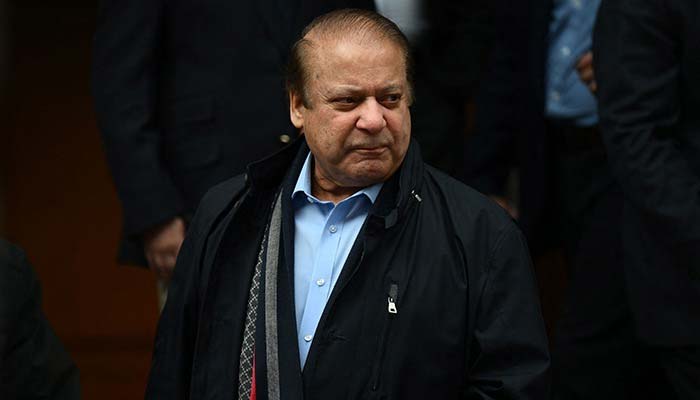

ISLAMABAD: Former prime minister Nawaz Sharif has directed senior leaders of the Pakistan Muslim League-Nawaz (PML-N) to refrain from issuing public statements in response to Interior Minister Mohsin Naqvi’s recent comments regarding the country’s “collapsed system,” according to party sources.
The directive comes at a time when Pakistan continues to face significant economic, political, and security challenges. Nawaz Sharif reportedly emphasized that the national interest requires complete harmony among state institutions and the continuation of close coordination between the elected government and the military leadership.
Sources familiar with the discussions said Nawaz Sharif advised party leaders that no statement or action should create the perception of differences between Prime Minister Shehbaz Sharif’s government and Chief of Army Staff and Chief of Defence Forces (CDF) Field Marshal Asim Munir.
He reportedly stressed that the current level of cooperation and understanding between the civilian government and military leadership is essential for addressing Pakistan’s pressing national challenges. According to the sources, Nawaz Sharif believes that maintaining institutional stability and mutual trust is critical for ensuring economic recovery, strengthening governance, and safeguarding national security.
The former prime minister is said to have highlighted that Pakistan’s current circumstances demand unity rather than political disagreements. He urged party members to prioritize the country’s broader interests and avoid statements that could be interpreted as exposing divisions within the state structure.
Sources added that Nawaz Sharif particularly emphasized preserving the existing coordination between Prime Minister Shehbaz Sharif and Field Marshal Asim Munir, describing their working relationship as important for advancing government policies and addressing national issues effectively.
Despite the public silence advised by Nawaz Sharif, party insiders revealed that several senior PML-N leaders privately expressed reservations over Mohsin Naqvi’s recent remarks.
According to the sources, these leaders believed that if the interior minister had concerns regarding weaknesses in governance or the administrative system, such issues should have been discussed during federal cabinet meetings instead of being raised publicly.
Some party leaders reportedly argued that describing the system as “collapsed” could unintentionally undermine the government’s efforts to improve governance and public administration. They feared that such remarks might create the impression that meaningful reforms are impossible under the existing administrative framework.
Senior PML-N figures are understood to have viewed the public comments as politically avoidable. They believed the remarks could raise unnecessary questions about the effectiveness of the government’s reform agenda and provide critics with an opportunity to challenge the administration’s performance.
However, despite these concerns, sources insisted that the discussions remained internal and did not indicate any conflict within the ruling establishment.
The sources strongly rejected speculation about any rift between Islamabad and Rawalpindi. They maintained that the civilian government and military leadership continue to work closely on key national priorities.
According to the sources, both sides remain aligned on issues including economic recovery, national security, investment facilitation, governance reforms, and broader national stability. They emphasized that there is no indication of institutional confrontation and that cooperation between the two leaderships remains intact.
Political observers note that Nawaz Sharif’s reported instructions reflect the PML-N leadership’s desire to avoid public controversy at a time when Pakistan is pursuing economic reforms and seeking greater political stability. Maintaining confidence among investors, international partners, and domestic stakeholders remains a key objective for the government.
The reported guidance also underscores the party leadership’s preference for resolving policy differences through internal consultations rather than public exchanges.
While debate over governance and administrative reforms is expected to continue, party sources maintain that the government’s focus remains on institutional coordination, economic progress, and addressing the country’s multiple challenges through collective efforts.
As Pakistan navigates a complex political and economic landscape, the emphasis on cooperation between civilian and military institutions is likely to remain a central feature of the government’s approach to governance and national decision-making.