

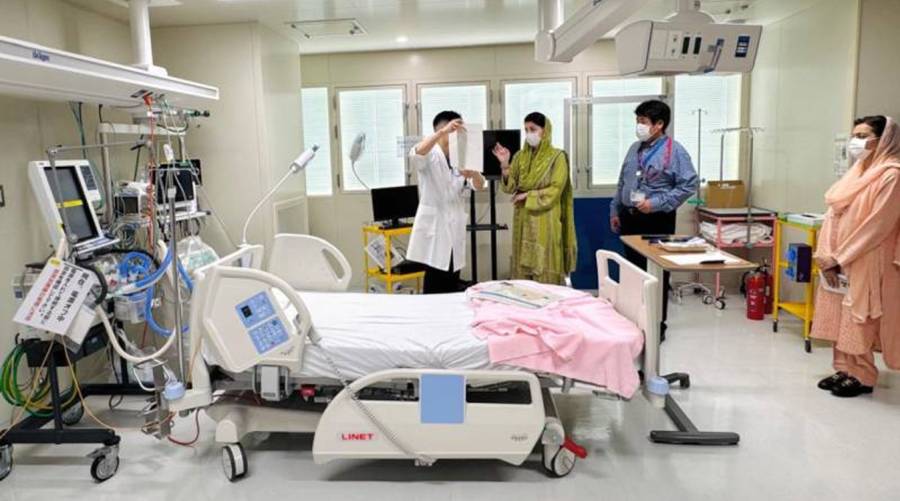
Punjab Chief Minister Maryam Nawaz Sharif has said more people are choosing public sector hospitals across the province, pointing to a significant rise in patient attendance. She made the remarks at a meeting on specialised healthcare and medical education, where a report on patient numbers and treatment was presented.
Background
The Punjab government has been running a series of health reforms in recent years, including the upgrading of rural health centres and the free supply of costly medicines for serious illnesses. The chief minister regularly reviews the performance of these programmes, and public hospitals are among the most visible measures of how well the system is working.
The latest review took place at a meeting of the Specialized Healthcare and Medical Education department, chaired by the chief minister. Officials presented data on how many patients are visiting tertiary care hospitals and what kind of treatment they are receiving.
Details
According to the report shared at the meeting, patient numbers at major public tertiary care hospitals in Punjab have risen by 16 per cent. The total number of patients treated at these hospitals has crossed 45.7 million, as reported by The Nation and Daily Times.
The increase was seen across departments. Outpatient visits went up by 21 per cent, inpatient admissions by 11 per cent, and emergency cases by nine per cent. Patient registration at major government hospitals also increased.
By speciality, internal medicine saw the sharpest rise at 26 per cent, followed by cardiology at 12 per cent and surgery at 10 per cent. Paediatric and dermatology patients each rose by nine per cent, while ENT cases increased by seven per cent.
The chief minister also noted that more than 2.1 million parcels of cancer and cardiac medicines have been delivered to patients under the provincial programme.
Quotes
Maryam Nawaz said the rise in attendance shows growing use of public sector hospitals by patients across the province. Her remarks were presented as evidence that the government’s healthcare programmes are reaching more people, though the figures come from an official report and were not independently verified in the coverage.
Impact
If the numbers hold, they suggest that more families are turning to public hospitals for treatment, which the government sees as a sign of growing public trust. A rise in cardiology, surgery and paediatric cases in particular points to demand for services that are expensive in the private sector.
At the same time, a 16 per cent increase also puts pressure on staff, beds and equipment. Health experts often point out that higher attendance does not automatically mean better care, since it can also reflect rising private treatment costs, and that crowding can affect waiting times unless capacity grows in step.
Conclusion
The government is likely to present these figures as proof that its health reforms are working, while patients and doctors will be watching for improvements in waiting times, staffing and facilities. Whether the trend continues will depend on how well hospitals cope with rising demand in the months ahead.
Frequently Asked Questions
What did the Punjab chief minister say about public hospitals?
Chief Minister Maryam Nawaz Sharif said there has been a significant increase in patient attendance at public sector hospitals across Punjab. The statement came after a report on attendance and treatment was presented at a meeting of the Specialized Healthcare and Medical Education department. The report showed a 16 per cent rise in patients at major tertiary care hospitals, with outpatient, inpatient and emergency cases all increasing. She also highlighted that more than 2.1 million parcels of cancer and cardiac medicines had been delivered to patients.
What do OPD, IPD and emergency numbers mean?
OPD stands for outpatient department, where patients are seen by a doctor and go home the same day. IPD refers to the inpatient department, covering patients admitted to a hospital bed for treatment. Emergency figures count patients who arrive with urgent conditions such as accidents, heart attacks or severe infections. According to the report presented to the chief minister, OPD visits rose by 21 per cent, inpatient admissions by 11 per cent and emergency patients by nine per cent.
Does a rise in patients mean government hospitals are getting better?
Not necessarily on its own. A higher number of patients can indicate growing trust in public hospitals, free or subsidised treatment and medicines, or better access to services. It can also reflect the higher cost of private care, which pushes more families toward government facilities. To judge quality, experts usually look at other measures such as waiting times, bed availability, staffing, patient outcomes and satisfaction, which were not part of the figures reported at the meeting.
Leave a comment