

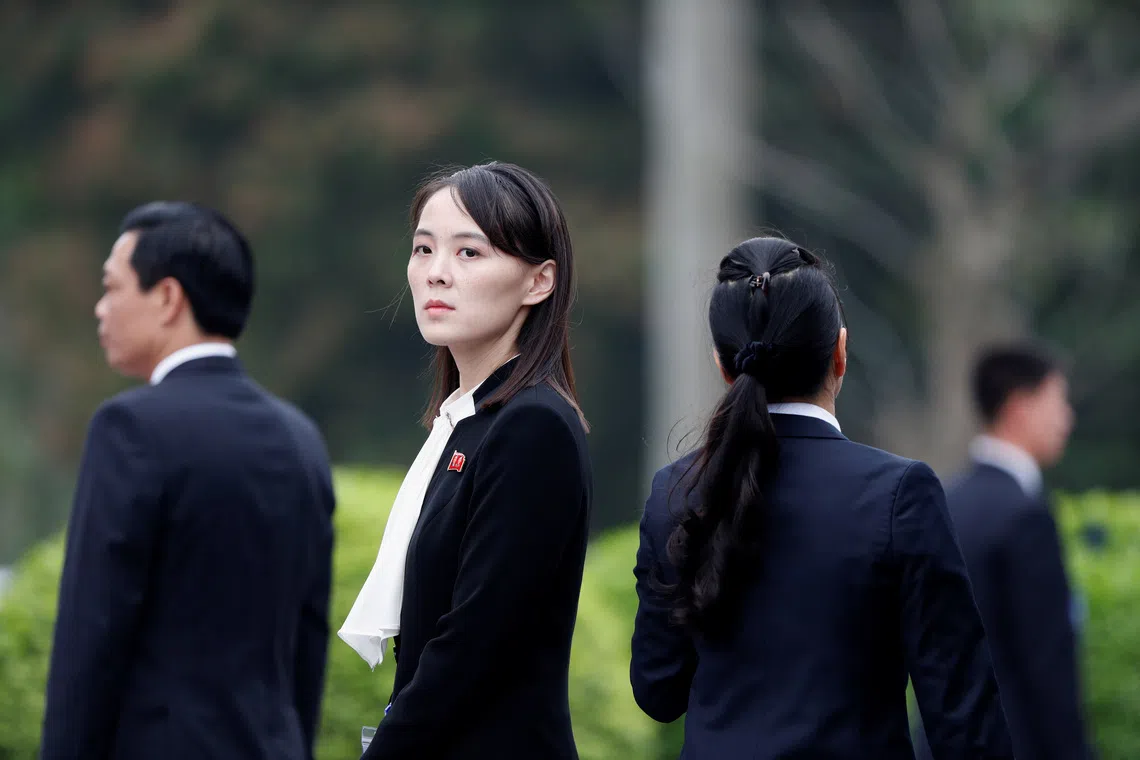
North Korea has once again refused to budge on its nuclear weapons program, this time through a pointed statement from Kim Yo-jong, the sister of leader Kim Jong-un. She dismissed international denuclearization calls as “all noises” and insisted the country’s nuclear status is now permanent, a response that came directly after the UN’s atomic watchdog raised fresh concerns in Vienna.
Background: Why This Statement Came Now
The remarks landed while the International Atomic Energy Agency’s General Conference was underway in Vienna, its 70th regular session. That gathering had already flagged concern over how far North Korea’s nuclear capacity has grown, and it pushed Pyongyang to give up its weapons program in a way that’s complete, verifiable, and irreversible, language tied to the Non-Proliferation Treaty.
Ahead of the conference, the IAEA also put out its Director General’s Safeguards Report on North Korea. That report described a real jump in the country’s uranium enrichment capacity, along with expansion at its core nuclear facilities. It’s the kind of finding that tends to trigger exactly this sort of pushback from Pyongyang.
What Kim Yo-jong Actually Said
Speaking through North Korea’s state news agency, KCNA, Kim Yo-jong brushed off the IAEA’s position entirely, calling it predictable and nothing new. She argued that repeated meetings and statements from the IAEA and Western governments carry no real weight against what she described as North Korea’s will and ability to defend its own interests.
Her language went further than a simple rejection. She said the North’s position as a nuclear weapons state is absolute and cannot be reversed by anything, framing it as something already settled both physically and legally within the country. That kind of wording isn’t new from Pyongyang, but repeating it this firmly, this soon after an IAEA report, is meant to send a signal.
Quotes From Officials
“No matter how desperately the IAEA and the West may hold periodic meetings and talk about the denuclearization according to the fixed scenario, they can have no effect on the will and ability of the DPRK to take all necessary measures to defend the supreme interests of the state,” Kim Yo-jong said, using North Korea’s official name, the Democratic People’s Republic of Korea.
She added a line meant to close the door on any future negotiation: “No one and nothing can ever reverse the crucial changes in the strength and position of the DPRK and prevent them in the future, too.” Statements like this one typically come from Kim Yo-jong herself rather than a lower-level ministry spokesperson, which is usually read as a sign of how seriously Pyongyang wants the message taken.
Impact: What This Means Regionally and Globally
For the IAEA, this is another instance of its findings being dismissed outright, with no indication North Korea plans to allow inspectors back in or scale down its program. The agency has operated without on-the-ground access to North Korea’s nuclear sites for years now, relying mainly on satellite imagery and outside reporting to track what’s happening.
Regionally, this keeps tension simmering around South Korea and Japan, both of which watch North Korea’s enrichment capacity closely as a direct security concern. It also reinforces a pattern that’s held for years: international pressure campaigns haven’t moved Pyongyang off its position, and there’s little sign that’s about to change.
Conclusion: What to Watch Next
Expect the IAEA to keep monitoring North Korea’s facilities from a distance and continue issuing safeguards reports, even without direct access. Whether this latest exchange leads to fresh sanctions discussions or just gets filed alongside years of similar statements will likely depend on what comes out of the rest of the Vienna conference and how Washington and Seoul choose to respond in the weeks ahead.
FAQs
Do they have news in North Korea?
Yes, but it works very differently from how most people think of a news industry. North Korea’s only news outlets are state-run, with the Korean Central News Agency, or KCNA, acting as the main source that domestic and even most international coverage of the country draws from. There’s no independent press inside the country, no privately owned outlets, and no foreign journalists based there permanently, so what gets reported is shaped entirely by the government’s messaging goals rather than open reporting.
What is the biggest cause of death in North Korea?
Public health data on North Korea is limited and not independently verifiable, since the government controls what gets released and outside researchers rarely get direct access. That said, organizations like the World Health Organization have estimated that non-communicable diseases, things like cardiovascular disease, cancer, and respiratory illness, account for the largest share of deaths in the country, a pattern broadly similar to many other nations, though North Korea’s numbers are considered less reliable than most.
Is North Korea still shut down?
North Korea sealed its borders extremely tightly during the COVID-19 pandemic, cutting off almost all trade and travel for an extended period. Those restrictions have eased significantly since then, with the country gradually reopening trade routes, particularly with China, and allowing limited travel back in. It isn’t fully open the way most countries are, and foreign tourism remains tightly restricted and controlled, but it is no longer in the near-total lockdown state it was during the pandemic’s peak.
Leave a comment