

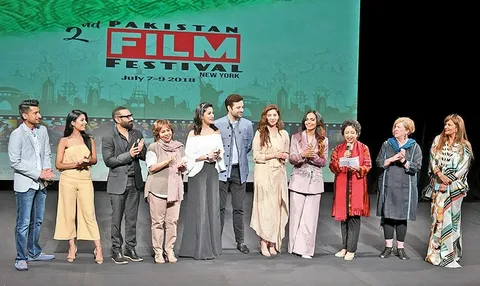
Pakistan’s festival calendar has genuinely grown busier this year, and that’s a real shift worth noting. Between the Islamabad International Film Festival, GIFF’s ongoing seventh edition, and several smaller regional showcases, 2026 has turned into one of the more active years for film festivals in Pakistan in recent memory.
Background A Growing, Crowded Calendar
For years, Pakistan’s film festival scene was thin. A handful of events carried the weight of representing independent and international cinema to local audiences, and most of them operated on tight budgets with limited reach. That picture has changed noticeably over the past few festival cycles.
Islamabad in particular has become something of a hub. The city now hosts multiple annual events, including the Islamabad International Film Festival, the long-running Women International Film Festival, and recurring programs like the European Film Festival’s Pakistan leg, which returns to the capital every year as its anchor city.
Why Islamabad Keeps Winning as a Host City
Part of the reason comes down to infrastructure. Venues like PNCA (Pakistan National Council of the Arts) and various cultural centers in Islamabad give organizers reliable spaces to work with, something that’s harder to line up consistently in busier commercial cities. Diplomatic missions based in the capital, including several European embassies, also tend to co-sponsor festival programming there, which adds funding and international film access that smaller festivals elsewhere don’t always get.
Details What’s Happening at IIFF and Around It
The Islamabad International Film Festival, often referred to by its acronym IIFF, describes itself as the fastest-growing film festival in South Asia. It followed up an earlier Istanbul-based premiere event with its main Pakistan-based edition, and it’s open to submissions across genres and languages from filmmakers worldwide.
IIFF runs a fairly extensive awards structure, covering categories from Best Feature Film and Best Documentary down to genre-specific short film awards for comedy, horror, thriller, and action work. It also runs IIFF Labs, a workshop and masterclass track aimed at emerging filmmakers, alongside the festival’s main screenings and red carpet events.
Other Names Worth Tracking This Year
Beyond IIFF and GIFF, a few other names are shaping the 2026 season. The Women International Film Festival marked its milestone 10th edition, WIFFX, in Islamabad in mid-February, screening 23 films from more than a dozen countries and running panel discussions on women’s roles in filmmaking. The European Film Festival’s fifth edition expanded this year too, adding Sialkot as a new host city alongside its usual stops in Islamabad and Sindh.
Smaller invitation-based events, like the PNCA-hosted Face Film Festival, round out the picture for filmmakers looking for additional exposure beyond the bigger-name festivals.
Quotes What Organizers Are Saying
The Delegation of the European Union to Pakistan, which runs the European Film Festival’s local edition, described this year’s expansion as a continuation of what it called a five-year journey across the country, pointing to the addition of new host cities as evidence of the festival’s growing footprint nationwide.
Separately, filmmaker Sarmad Sultan Khoosat, whose film “Lali” became the first all-Pakistani production to premiere at the Berlinale earlier this year, spoke about what that kind of international recognition means locally. He described Pakistan’s film industry as having gone through what he called a “semi-gradual kind of demise” over the past couple of decades, and framed international festival exposure as one route back toward rebuilding that industry’s profile.
Impact What a Busier Festival Calendar Means for the Industry
More festivals mean more exhibition opportunities, and that matters in a market where cinema screens are dominated by commercial releases. Independent filmmakers, documentary makers, and first-time directors have historically had very few places to actually show finished work to an audience in Pakistan, so each new or expanding festival chips away at that gap.
There’s also a training and networking dimension. Events like IIFF Labs and the panel discussions run by WIFF give emerging filmmakers direct access to industry professionals, something that used to require leaving the country entirely to access consistently.
Conclusion What’s Coming Next in the 2026 Season
With GIFF’s submission window running through the end of July and IIFF continuing to build on its “Season 3” branding, the rest of 2026 is likely to bring more festival announcements rather than fewer. Regional expansion, like the European Film Festival’s move into Sialkot, suggests organizers see real appetite for these events outside the usual major cities.
For filmmakers and audiences tracking film festivals 2026 across the country, the safest approach is to follow each festival’s official channels directly, since dates, venues, and lineups tend to firm up gradually rather than all at once.
Frequently Asked Questions
Who is going to the Cannes Film Festival 2026 from Pakistan?
Cannes 2026, the festival’s 79th edition, took place in May and already featured a strong Pakistani presence on the red carpet side of things. Actors Sanam Saeed and Sadia Khan both attended, with Sanam recognized as part of an inaugural honoree group celebrating South Asian women in cinema and the arts. Model Roma Michael and designer Hussain Rehar also represented Pakistan through fashion and cultural showcases tied to the festival. Because this edition of Cannes has already wrapped up, attention now turns to who might represent Pakistan at the next edition.
Who will attend Berlinale 2026?
This question technically points to an event that has already happened, since the 76th Berlinale ran from February 12 to 22, 2026. It turned out to be a landmark year for Pakistani cinema specifically, with Sarmad Sultan Khoosat’s “Lali” becoming the first all-Pakistani feature film to premiere at the festival, screening in the Panorama section to a full house that included Pakistan’s ambassador to Germany. Seemab Gul’s “Ghost School,” a Pakistan co-production with Germany and Saudi Arabia, also screened as part of the festival’s Generation programme for younger audiences. Both films have since gone on to screen at additional international festivals following their Berlin premieres.
How much does it cost to submit a film?
It depends entirely on which festival and which submission window you’re using. Some Pakistani festivals, including GIFF’s current edition, have offered free submissions with no entry fee at all, which lowers the barrier for first-time and low-budget filmmakers. Others, particularly larger international festivals, charge fees that can range from modest amounts for early submission windows up to significantly higher costs closer to the final deadline. Filmmakers submitting to multiple festivals in a season should budget carefully and prioritize free or low-cost entries first, since fees can add up quickly across several platforms.
Leave a comment