

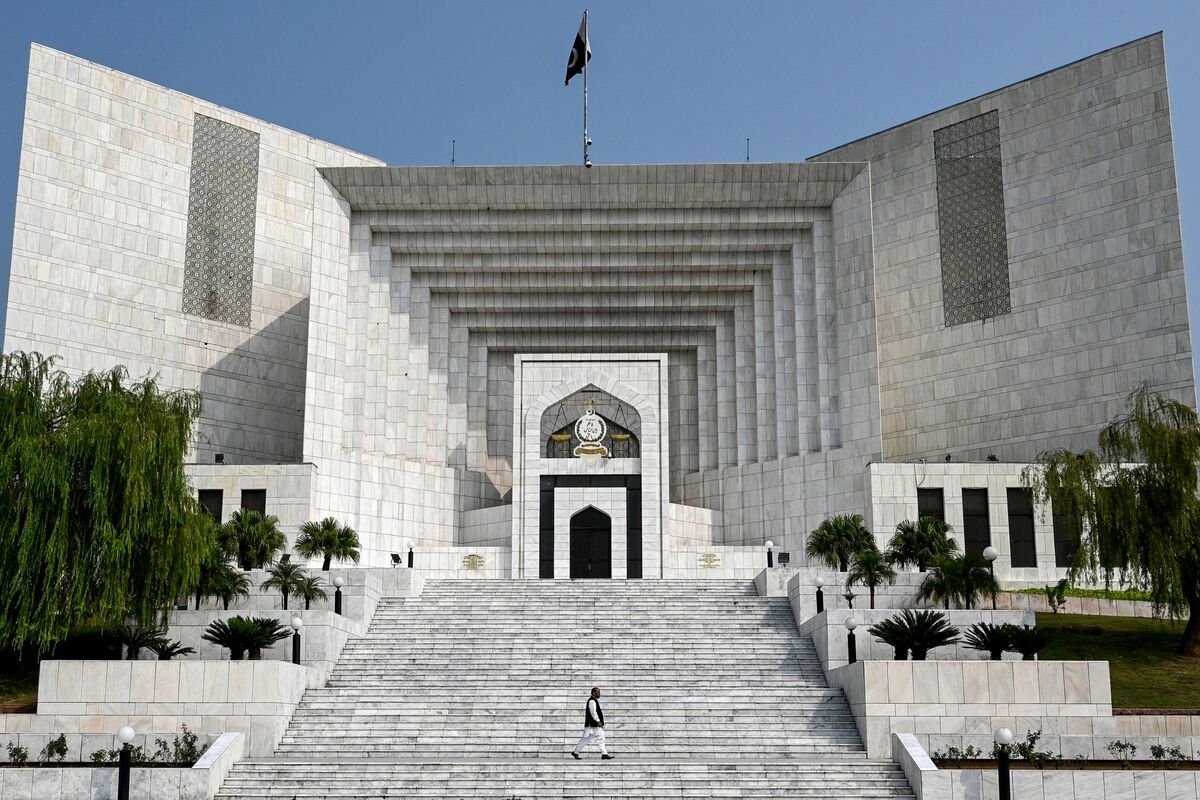
If you have ever tried to track a court case in Pakistan without a lawyer sitting next to you, you know the frustration. That is exactly why so many people search for Supreme Court of Pakistan online case status every week. This guide walks through how the system actually works, and it also covers a real case moving through the courts right now: the Federal Constitutional Court’s decision to pull the records of Imran Khan’s hospital transfer case away from the Supreme Court.
Background: A New Court, an Old Question About Power
Pakistan’s judicial system got a major shake-up when the Federal Constitutional Court, or FCC, was created. The FCC was designed to handle constitutional interpretation and questions involving fundamental rights, areas that used to sit squarely with the Supreme Court. That overlap was bound to cause friction eventually, and it has.
The current flashpoint involves former prime minister Imran Khan. Back on August 18, the Supreme Court ordered jail authorities to move Khan to Shifa International Hospital, a private facility in Islamabad, for medical treatment. Three inmates at Adiala jail later argued they deserved the same treatment and took their case to the Islamabad High Court, which rejected their plea. From there, the matter escalated to the FCC.
Details: What the FCC Actually Did
On September 15, a three-member FCC bench led by Chief Justice Aminuddin Khan ordered the Supreme Court to hand over the complete case record connected to Khan’s hospital transfer. The bench also directed every high court in the country to send along records of any similar pending cases. This wasn’t a minor procedural request. It effectively froze the Supreme Court’s ability to keep moving forward on that specific matter.
The legal basis cited was Article 175E of the Constitution, which gives the FCC authority to call for the record of any case pending in any court if it decides the matter involves a substantial constitutional question. Attorney General Mansoor Usman Awan told the bench that constitutional interpretation now belongs to the FCC, not the Supreme Court. That is a significant claim, and it is not one everyone in the legal community accepts without pushback.
This matters well beyond Khan’s individual case. People searching for pending cases in Supreme Court of Pakistan right now are partly reacting to this story, because the outcome could affect how many other constitutional matters get pulled out of the Supreme Court’s hands going forward.
Quotes: What Officials and Judges Have Said
During the hearing, Attorney General Awan argued that the Supreme Court had passed its August 18 order without giving the government a chance to raise objections. FCC Justice Ali Baqar Najafi asked directly whether the government had ever formally objected before the Supreme Court, pressing on whether procedural steps had actually been followed.
In an earlier related hearing, FCC Justice Aamer Farooq questioned why Khan was sent to a private hospital at all when jail rules point toward government facilities. Justice Ali Baqar Najafi, in that same session, said there should be no discrimination between prisoners when it comes to medical care.
On the other side, the Islamabad High Court had earlier ruled that an interim order cannot be treated as a final judgment, a point it made when rejecting the three inmates’ request for private hospital treatment.
How to Check Supreme Court Case Status Online
Whatever happens with the Khan case, the everyday reality for most people dealing with the courts is simpler: they just want to know where their own case stands. The Supreme Court maintains an official online case status tool, and here’s roughly how people use it.
Start at the Supreme Court’s official website and look for the “Online Case Status” section. You can typically search using a case number, a party name, or filing details, which is why so many people specifically look up Online Case search by Name instead of digging through paperwork for a case number they may not remember.
The portal also lets users filter results by registry. Since the Supreme Court operates registries in Islamabad, Lahore, Karachi, Peshawar, and Quetta, someone searching for Supreme Court Islamabad case status will get different results than someone running an Online case search Lahore or an Online case search Punjab, depending on where the case was actually filed.
For lawyers and frequent users, the Supreme Court also offers a dedicated mobile app that provides case search, judgment search, and cause list access, along with personalized alerts for registered users. This has made getting Supreme Court case information noticeably faster than it used to be, especially for people outside the major cities who previously had to rely on local counsel for basic updates.
Impact: Why This Jurisdictional Fight Matters
A dispute over who controls constitutional cases is not just a legal technicality. It shapes how ordinary citizens, prisoners, and political figures alike get their cases heard, and how fast.
If the FCC continues asserting authority to pull cases from the Supreme Court whenever it decides a constitutional question is involved, it changes the practical experience of litigation in Pakistan. Cases could shift courts mid-process, timelines could stretch out, and lawyers will need to think carefully about which court to approach first.
There is also a broader trust dimension here. Public confidence in the judiciary depends partly on predictability. When two apex-level courts appear to be negotiating jurisdiction in real time, through a case as politically visible as Imran Khan’s, it puts pressure on both institutions to explain their reasoning clearly.
Conclusion: What Comes Next
The Supreme Court’s three-member bench, headed by Justice Shahid Waheed, was scheduled to take up related contempt proceedings this week before the FCC’s order effectively paused that track. It is not yet clear how the Supreme Court will formally respond to having the case record pulled, and legal commentators expect this jurisdictional question to keep resurfacing in future cases, not just this one.
For everyday users, none of this changes how the basic online case status tools work. Whether you are checking on a property dispute, a criminal appeal, or a civil matter, the same search options apply. As always, for anything time-sensitive or high-stakes, it’s worth confirming details directly through the Supreme Court’s official website rather than relying on secondhand summaries, since court schedules and case statuses can shift quickly.
Frequently Asked Questions
What is Article 175E of the Constitution of Pakistan?
Article 175E gives the Federal Constitutional Court the power to call for the record of any case pending before any other court in Pakistan, on its own initiative or otherwise, if it believes the case raises a substantial question of law about constitutional interpretation. Once it takes up the record, the FCC can issue whatever order it considers appropriate, which is the exact provision being used in the ongoing dispute over Imran Khan’s hospital transfer case. This article was introduced as part of the broader restructuring that created the FCC as a separate constitutional court alongside the existing Supreme Court.
What does FCC stand for in Pakistan?
FCC stands for the Federal Constitutional Court, a court established to specifically handle matters involving constitutional interpretation and fundamental rights cases. It operates separately from the Supreme Court of Pakistan, though the exact boundary between what each court can hear has become a genuinely contested question, as shown by the current dispute over the Imran Khan hospital case. The FCC is headed by Chief Justice Aminuddin Khan, with other sitting judges hearing cases as part of rotating benches.
Which court is the most powerful in Pakistan?
This is actually one of the more debated questions in Pakistani law right now, and there isn’t a single settled answer. Historically, the Supreme Court held the position as the final court of appeal and the ultimate authority on most legal matters in the country. Since the creation of the Federal Constitutional Court and its expanding role in constitutional and fundamental rights cases, including its recent move to summon records directly from the Supreme Court, legal experts are actively debating how power is now divided between the two institutions, and that debate is likely to continue as more cases test the boundaries between them.
This article is based on reporting from Dawn, The Express Tribune, Geo News, Daily Pakistan, and official Supreme Court of Pakistan resources. Court proceedings are ongoing and case outcomes may change; readers should verify current case status directly through the Supreme Court’s official website or app.
Leave a comment