

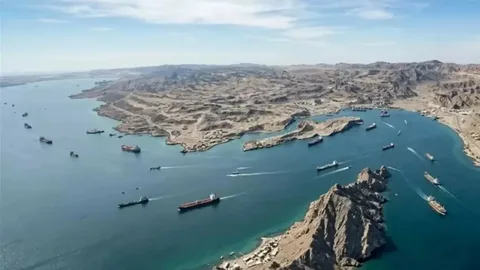
A merchant vessel was struck early Sunday off Qeshm Island in the Strait of Hormuz, killing one crew member and wounding three to four others, as Iran and the United States continue their six-month war over control of the waterway. The incident comes as global attention turns once again to a simple but consequential question: how many ships are actually still making it through Hormuz, and how does that compare to before the fighting started.
Summary
Before the war began in February 2026, roughly 100 to 138 ships passed through the Strait of Hormuz every single day, carrying about a fifth of the world’s oil and gas. Since then, traffic has collapsed by as much as 95 percent at its lowest point, and even now, with the US claiming dozens of daily escorted transits, independent ship-tracking data suggests real numbers remain far below normal.
Background: Why the Strait Matters So Much
The Strait of Hormuz is a narrow channel between Iran and Oman that ships have to pass through to move oil and gas out of the Gulf. There’s no realistic detour, which is exactly why it became the center of gravity in this conflict the moment fighting broke out between the US, Israel, and Iran on February 28, 2026.
Iran effectively shut the strait to most traffic once the war started, and the US responded weeks later by imposing its own naval blockade on Iranian ports. A ceasefire memorandum signed on June 17 briefly reopened the waterway, but shipping never returned to anything close to normal, and by late summer the two sides were back to striking each other’s vessels directly.
How Many Ships Pass Through the Strait of Hormuz Today
Right now, the honest answer depends heavily on whose numbers you trust. Independent ship-tracking data from firms like Kpler and Lloyd’s List, along with the BBC’s own analysis, has consistently shown daily transits running well below pre-war levels, even during stretches when Washington described traffic as bouncing back strongly.
At the worst point of the war, in the first week of March 2026, IMF PortWatch data showed daily transits collapsing to around six ships a day, down from roughly 100 a day in February. When the strait reopened after the June ceasefire deal, traffic only recovered to about 28 ships a day on average, still a fraction of normal.
More recently, US officials have claimed the numbers are climbing again, with Vice President-level statements putting daily crossings in the 30-to-40 range under US Navy escort, and Treasury officials citing millions of barrels of oil moving through daily. Independent trackers, however, have questioned those figures, and outlets like Al Jazeera have reported that the data doesn’t fully back up Washington’s more optimistic claims.
Ships Passing Through Strait of Hormuz Yesterday and This Week
In the days immediately before Sunday’s strike, shipping had been inching upward compared to the war’s early months, but nowhere near a full recovery. Roughly 90 to 100 vessels total, including a mix of oil tankers, cargo ships, and container vessels, have crossed the strait since the war began, according to maritime analytics platforms tracking the route, and many of those transits involved so-called “dark” ships evading sanctions monitoring.
Ships Passing Through Strait of Hormuz Yearly
In a normal year, before any of this started, more than 30,000 tankers passed through the Strait of Hormuz, according to figures compiled by Britannica, alongside thousands more container and cargo vessels. That yearly figure has been thrown completely off track by the war, and given how sharply monthly totals have swung, from single digits a day to the low dozens, this year’s full total will likely land far below any pre-war year on record.
Quotes From Officials
Qeshm’s city governor, Amir Teymouri, gave the only official Iranian account so far, confirming the casualty numbers to state broadcasters without assigning direct blame to any specific country or group.
Separately, in comments earlier this month responding to a different round of tanker strikes, CENTCOM commander Admiral Brad Cooper laid out Washington’s position bluntly, warning that Iranian attacks on US Navy vessels would be met with strikes on Iran’s own tanker fleet. He said the US would not hesitate to defend American forces and, if necessary, target Iran’s oil fleet directly.
Iran’s Foreign Ministry has pushed back hard against that approach, describing earlier US tanker strikes as illegal and accusing Washington of running an economic war against Iran through its naval blockade.
Impact: A Global Oil Market on Edge
Every disruption to Hormuz traffic ripples through global energy markets almost immediately, since roughly a fifth of the world’s oil and gas normally passes through this single channel. Crude prices spiked above $100 a barrel earlier in the war, and any fresh strike, like Sunday’s, tends to reintroduce that volatility even when the physical damage is limited to a single vessel.
The strike also complicates diplomacy at a delicate moment, landing right before Iran’s scheduled meeting with Gulf states over shipping arrangements. For countries like Saudi Arabia, which has increasingly relied on the strait for its own oil exports after other routes came under pressure, continued instability here is a direct economic threat, not just a distant geopolitical story.
Conclusion: What Comes Next
Expect ship traffic numbers to remain a point of dispute between US officials and independent trackers for as long as the war drags on, since both sides have clear incentives to describe the situation differently. The scheduled Oman meeting between Iran and Gulf states will be watched closely for any sign of a more durable arrangement, though Sunday’s strike suggests that outcome is still far from guaranteed.
FAQs
Did Iran hit the UAE today?
Based on current reporting as of this article, no strike on the UAE is confirmed for today specifically. Iran has hit the UAE multiple times since the war began in February 2026, including a large multi-day missile and drone barrage at the outset that killed several foreign workers, plus later strikes that pushed the UAE into imposing a trade embargo on Iran. Given how fast this conflict moves, any claim of a strike “today” is worth double-checking against live wire reports before repeating it.
How many Iranian tankers has the US destroyed?
The US has struck Iranian tankers on multiple separate occasions since adopting what officials have called a “tanker for tanker” retaliation policy. In early September 2026 alone, CENTCOM said it struck three Iranian tankers after Iranian forces fired on US Navy vessels, then destroyed five more just days later following another round of attacks on US warships. The exact cumulative total continues to grow as the tit-for-tat strikes continue, so any specific number should be treated as a snapshot rather than a final count.
Did Iran attack a US tanker?
Reporting so far points to Iran targeting US Navy warships directly, including an aircraft carrier and guided-missile destroyers, with ballistic missiles, rather than attacking tankers flagged specifically as American vessels. Most of the tanker-on-tanker violence in this conflict has run the other way, with the US striking Iranian-flagged tankers in retaliation for Iranian missile attacks on its warships, while Iran has separately targeted commercial vessels of various nationalities passing through the strait without its approval.
Leave a comment