
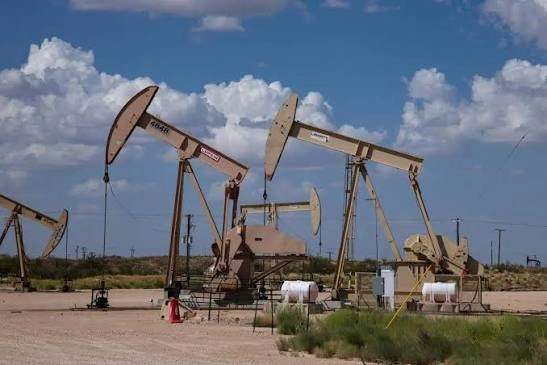

LONDON: Oil prices rose for a fourth consecutive session on Wednesday, gaining more than $1 a barrel in early trading as renewed attacks across the Middle East increased concerns about disruptions to global crude supplies.
By 0212 GMT, Brent crude futures had climbed 1.4% to $99.33 a barrel, while US West Texas Intermediate (WTI) crude rose 1.4% to $94.34 a barrel.
Brent crude has surged by around 25% since early August, putting prices close to the key $100-a-barrel threshold as hopes for a permanent resolution to the six-month-old conflict have weakened.
Oil prices climb as Middle East conflict intensifies
The latest rise in oil prices follows a sharp escalation in fighting across the region.
On Tuesday, Iran-backed Houthi forces in Yemen launched attacks on several Saudi cities, drawing another major US ally deeper into the conflict.
The United States also carried out strikes against several Iranian oil tankers, while Iran targeted a US military base in Jordan, according to the report.
The developments have increased fears that the conflict could spread further and disrupt oil production, transportation and exports from some of the world’s most important energy-producing regions.
The renewed violence comes as Middle Eastern oil infrastructure and shipping routes are already under pressure.
Analysts at ING said the latest developments suggested that peace negotiations remained some distance away. They said the market was likely to continue pricing in a significant risk premium because of uncertainty surrounding regional supplies.
The risk is particularly important because the Middle East supplies a substantial share of global crude oil.
Saudi Arabia has reportedly redirected some crude exports away from the Strait of Hormuz, a critical shipping route for international energy markets.
However, analysts warn that sustained attacks on Saudi territory or energy infrastructure could make it increasingly difficult to maintain stable crude flows.
OCBC analysts said attacks on Saudi energy facilities, combined with the destruction of five Iranian tankers, had raised concerns about another prolonged disruption to global oil supplies.
The Strait of Hormuz is particularly important because large volumes of crude and other energy products pass through the waterway each day.
Any prolonged disruption could place additional upward pressure on oil prices, particularly if producers are forced to reduce exports or shipping companies face increased security risks.
The latest rally has pushed Brent crude increasingly close to $100 a barrel.
The benchmark has gained roughly one-quarter since early August, reflecting growing concerns about supply security as the regional conflict continues.
For consumers and businesses, sustained higher oil prices could increase fuel, transportation and production costs. Higher energy prices can also contribute to broader inflationary pressure if elevated crude prices persist.
Markets will therefore be closely watching developments in the Middle East, particularly any attacks on energy infrastructure, shipping routes or major oil-producing countries.
With diplomatic efforts showing limited progress and military activity continuing, traders are increasingly focused on whether the current disruption remains temporary or develops into a longer-term threat to global oil supplies.