
SINGAPORE: Oil prices fell by more than $1 a barrel on Monday as investors took profits following two consecutive weeks of gains, while markets awaited an expected US announcement on tougher sanctions against Iran.
Brent crude futures fell $1.23, or 1.3%, to $93.16 a barrel by 0329 GMT. US West Texas Intermediate (WTI) crude declined $1.36, or 1.6%, to $85.70 a barrel.
Despite Monday’s decline, both benchmarks recorded their second straight weekly gains last week, rising by more than 5% as diplomatic efforts between the United States and Iran stalled.
Markets are closely watching Washington for details of its latest sanctions package against Iran.
US Treasury Secretary Scott Bessent is scheduled to hold a press conference on Monday, where he is expected to announce measures that could further restrict Iran’s ability to export oil.
Bessent has previously described the planned measures as potentially involving “the toughest sanctions in history.”
US President Donald Trump has also threatened sanctions against countries and companies that continue trading with Iran.
The potential measures have raised concerns that restrictions on Iranian oil exports could further tighten global crude supplies.
Strait of Hormuz Remains a Key Concern
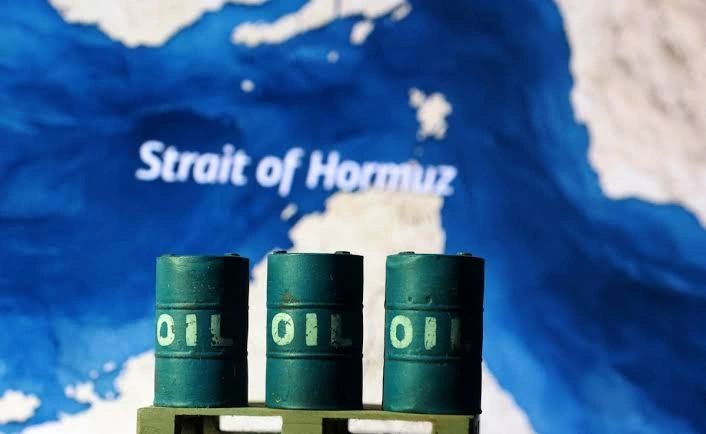
Oil markets are also closely monitoring developments around the Strait of Hormuz, a crucial shipping route for global energy supplies.
The route has faced disruption as tensions between the US and Iran have escalated, with oil shipments through the strategic waterway significantly affected.
The Strait of Hormuz is particularly important to global energy markets because a substantial share of the world’s oil supply traditionally passes through the waterway.
Any prolonged disruption could increase shipping risks, reduce available supplies and push crude prices higher.
Iran has condemned Washington’s plans for additional sanctions, while President Masoud Pezeshkian has called for a diplomatic solution to the escalating dispute.
Analysts say divisions within Iran’s leadership could influence how Tehran responds to increasing economic and military pressure.
Vivek Dhar, a commodities analyst at Commonwealth Bank of Australia, said it remained unclear whether US efforts to economically isolate Iran would achieve their intended goal.
He warned that if the sanctions prove effective, Iran’s potential response could create additional risks for global energy markets.
Iranian Oil Supplies to China Decline
Trade sources said offers of Iranian crude to Chinese buyers have declined, while prices have increased as US restrictions have reduced Tehran’s shipments.
China has been an important destination for Iranian oil, meaning any sustained reduction in Iranian exports could have consequences for regional and global crude markets.
At the same time, Iran has reportedly allowed several Iraqi oil tankers to pass through the Strait of Hormuz following repeated requests from Baghdad, according to Iran’s state news agency IRNA.
The move could provide some relief to regional energy flows, although analysts remain concerned about broader supply disruptions.
Analysts at Morgan Stanley said global crude supplies were tightening, pointing to declines in oil held on water as well as falling onshore inventories, including in China.
They said the reduction in supply was particularly noticeable in the Middle East, where several data sources indicated that aggregate exports had returned to levels last seen in March and April.
As a result, analysts have slowed their expectations for a recovery in Middle Eastern oil supplies.
Oil Market Faces Greater Uncertainty
The ongoing US-Iran confrontation has created significant uncertainty for global energy markets.
While oil prices declined on Monday because of profit-taking, the potential for tougher US sanctions, reduced Iranian exports and continued disruption around the Strait of Hormuz could provide upward pressure on crude prices.
Market participants will therefore be watching Washington’s sanctions announcement closely, while also monitoring diplomatic developments between the United States and Iran.
If tensions continue to escalate and Middle Eastern supplies remain constrained, the global oil market could face tighter inventories and increased price volatility in the weeks ahead.