
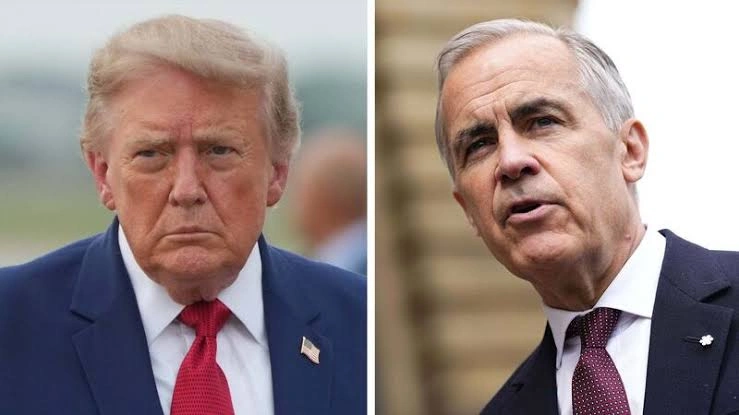

WASHINGTON: US President Donald Trump has delayed the introduction of new 50% tariffs on a wide range of Canadian goods for three days, saying the pause would give the United States and Canada additional time to finalise a potential trade agreement.
Trump announced the decision on social media shortly before the new tariffs were scheduled to take effect. He said the 50% duties on Canadian imports had been paused because the two countries were close to reaching a deal, subject to the completion and signing of the necessary documents.
The tariff increase was expected to affect nearly $20 billion worth of Canadian imports, raising concerns about another escalation in trade tensions between the two North American neighbours. The new duties had been scheduled to come into effect on Tuesday morning.
Trump said the temporary suspension was based on the belief that the United States and Canada had reached an agreement in principle. However, negotiations remained active, with senior trade officials from both countries meeting in Washington following the announcement.
Speaking to reporters on Wednesday, Trump described the potential agreement as “very good” for both countries. He indicated that Canada could offer concessions involving agriculture and manufacturing as part of the proposed arrangement.
The US president also suggested that the agreement could lead to reductions in some existing American tariffs on Canadian products, although the final terms had yet to be completed.
The two countries have been struggling to resolve several major trade disputes. Among the outstanding issues are US tariffs affecting Canadian automobiles and restrictions imposed by a number of Canadian provinces on the sale of American alcoholic products.
Trade negotiations have intensified in recent weeks as both governments attempt to prevent the latest tariff escalation. Trump and Canadian Prime Minister Mark Carney spoke twice during the week, while trade representatives have held intensive discussions since July.
The latest tariff threat followed Trump’s announcement that a 50% levy would be imposed on a broad range of Canadian goods unless progress was made toward a new trade arrangement by the August 19 deadline.
The three-day pause now gives negotiators additional time to resolve remaining disagreements and prepare the final documents. However, the temporary nature of the decision means that tariffs could still take effect if the two sides fail to complete the agreement.
The potential deal could have significant economic implications for both countries. Canada and the United States maintain one of the world’s most closely integrated trading relationships, with businesses on both sides of the border relying heavily on cross-border supply chains.
Canadian exporters have been particularly concerned about the impact of higher US tariffs on manufacturing, agriculture and other sectors. American companies could also face higher costs if tariffs increase the price of Canadian raw materials, components and other imported goods.
Trump’s latest decision represents a temporary easing of trade tensions, but the outcome will depend on whether negotiators can finalise the proposed agreement within the three-day window.
For now, trade officials from Washington and Ottawa remain engaged in negotiations, with both sides under pressure to resolve outstanding issues before the tariff pause expires.